


ILO and FAO: Agricultural employment in Latin America remains largely informal
New joint report by ILO and FAO highlights that over 80% of jobs in the sector lack formal protections and social security.
©FAO/Alexander Taveras
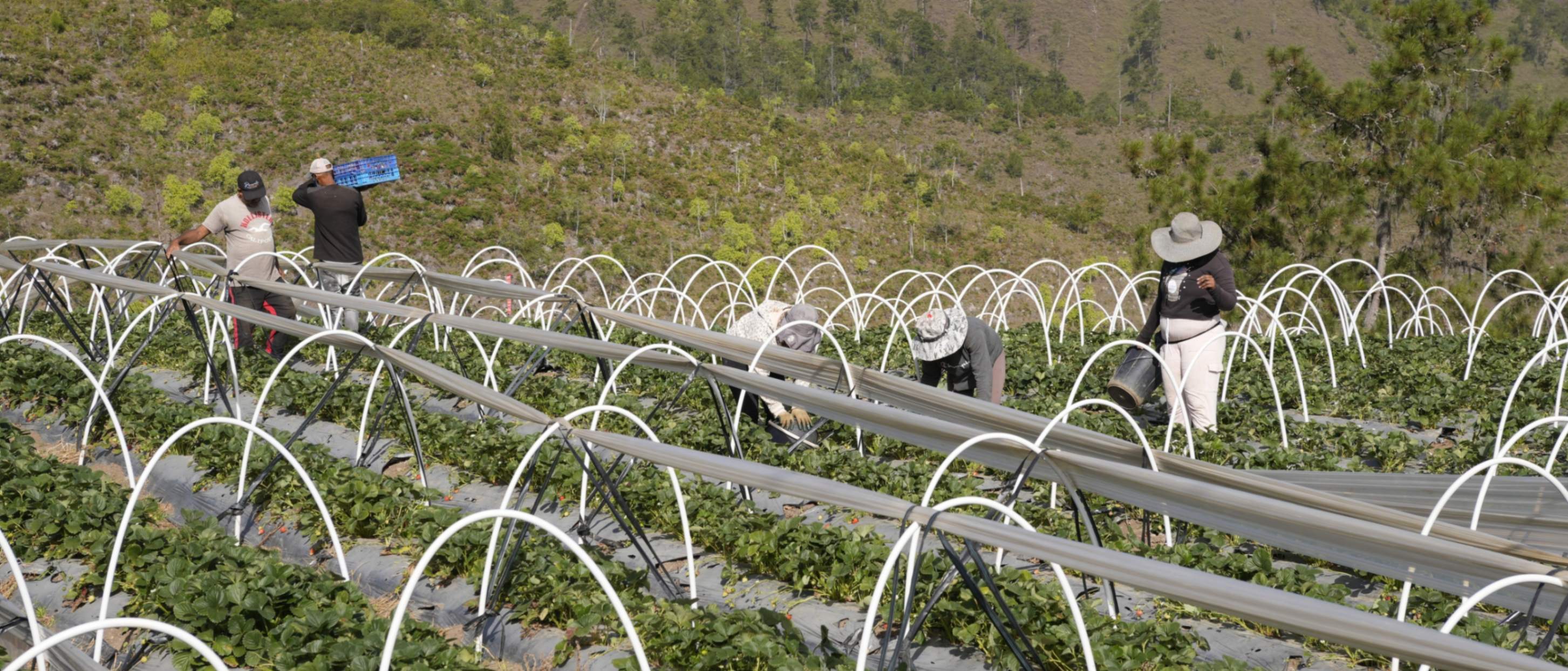
More than 80 percent of agricultural employment in Latin America continues to operate under labor arrangements without formal protection, disproportionately affecting women, young people and older adults in rural areas, according to a new report by the International Labour Organization (ILO) and the Food and Agriculture Organization of the United Nations (FAO).
The new study identifies structural gaps in productivity, income, and access to social protection as persistent factors limiting progress toward decent work in the sector. Despite its fundamental role in food security, agricultural employment continues to face challenges associated with low levels of training, fragile working conditions, and significant exposure to environmental and climate-related risks.
“Ensuring decent work in the agricultural sector is not only about improving working conditions; it is about strengthening our countries’ resilience, the food security of millions, and the region’s capacity to confront global challenges,” emphasized FAO Assistant Director-General and Regional Representative for Latin America and the Caribbean, Rene Orellana Halkyer, who also called for strengthened social dialogue, rural digitalization and sustained financing.
“Informality remains one of the major structural challenges for social justice and sustainable development in Latin America. This report provides a roadmap for addressing it through integrated policies with a territorial approach,” stated ILO Regional Director for Latin America and the Caribbean, Ana Virginia Moreira. She also noted that the study aligns with Recommendation No. 204 and with the FORLAC 2.0 Strategy, as well as the Joint Programme that both organizations are implementing to promote the formalization of rural employment.
According to the report, women have a precarious employment rate of 86.4 percent, compared with 78 percent among men. A total of 38.5 percent of women work as unpaid family helpers—five times the proportion among men. In addition, the sector accounts for 46 percent of child labor in the region, and more than 50 percent of workers have low levels of education. Seasonal employment, the absence of contracts, and part-time work further worsen labor conditions.
Between 2019 and 2023, the volume of agricultural employment remained stable, but with no significant progress in formalization, the report notes. Furthermore, nearly half of young workers and 86 percent of women in the sector work without formal protection.
The report also analyzes 35 public policies implemented in the region, concluding that although many seek to improve rural productivity, few explicitly incorporate employment formalization objectives or include a gender approach.
The study proposes 10 concrete policy recommendations to accelerate the transition to formalization and ensure decent work in the agricultural sector. These evidence-based measures, drawn from regional experiences, seek to integrate productive development, social protection, labor rights, and social dialogue to transform high informality into sustainable opportunities for millions of rural workers.
Both organizations announced their commitment to support governments, employers, and workers in designing and implementing integrated policies that transform the agricultural sector into an actual engine of decent employment, food security, and sustainability for Latin America.
Contact
Ricardo Rivera Communications Specialist [email protected]