


Hand in Hand with the Land: Family Farming Transforming Peru
Matilde, Abel and Irineo are farmers, community leaders and guardians of ancestral knowledge. From the highlands of Junín, in central Peru, they represent a new generation of producers who show that family farming can be a driver of development, identity and sustainability for the country.


From the highlands of Junín, in central Peru, producers show that family farming can be a driver of development, identity, and sustainability for the country.
©FAO/Miguel Arreátegui
27/11/2025
High in Jauja, Junín, at more than 3 800 meters above sea level, Matilde Liz Chávez Vela grows with her hands what she inherited with her soul: native potatoes. Her cooperative, INPAMI —whose name in Quechua means “Feeding the World”— is far more than an agricultural enterprise, it is a way of life that honors her ancestors and Pachamama. “We plant without pesticides, rotating crops just as my grandparents did”, she says, as she shares her ritual of paying tribute to the earth before every harvest.
Matilde not only grows vividly colored native potatoes; she also cultivates respect, tradition and pride. Together with her daughter, she has passed on this love for agriculture, seeking to ensure that new generations do not lose their connection to the land. “My potatoes are like my children, each one has its own name, color and spirit. I care for them, I embrace them, and when I harvest them, I feel alive”, she says, her voice trembling with emotion.
Today, her aspiration is clear: to have her own facility to process chips and potato flour. “We already have the machines, what we’re missing is the roof”, she says. What began as production for household consumption now aims to reach more tables and markets, proving that farming, when it is valued, can be a driver of family and community development.
Abel Quilca Hualpa, president of the CASICE cooperative in Junín, also understands the value of planting in community. After years when agriculture seemed like a dead-end path, he and other families decided to organize and take on a collective challenge: turning their efforts into real opportunities. “Before, we thought about leaving the farm, but now we know that native potatoes are our future. As a cooperative, we plant up to 10 hectares, and that allows us to feed ourselves, educate our children and grow. We perform rituals to thank Pachamama before every harvest, because this land is sacred”, he recounts.
In a calm voice, he recalls the moment when everything changed: a business roundtable organized in Huancayo by Agromercado and FAO. There they met investors, supermarket chains and restaurants interested in their native potatoes. “Thanks to FAO, we are now in talks with supermarkets Plaza Vea, Metro, and other markets. It was a turning point. They told us: unite, and we did. This year we are already delivering native potatoes to the company Tiyapuy, thanks to a contract we signed after that business roundtable. It is a huge step that fills us with pride”.
He dreams of having his own processing plant and of seeing his children running the cooperative. “We don’t want them to leave the land. We want them to come back, but as professionals. To study and apply their knowledge here, in our community. That way, the countryside will be the future we deserve”.
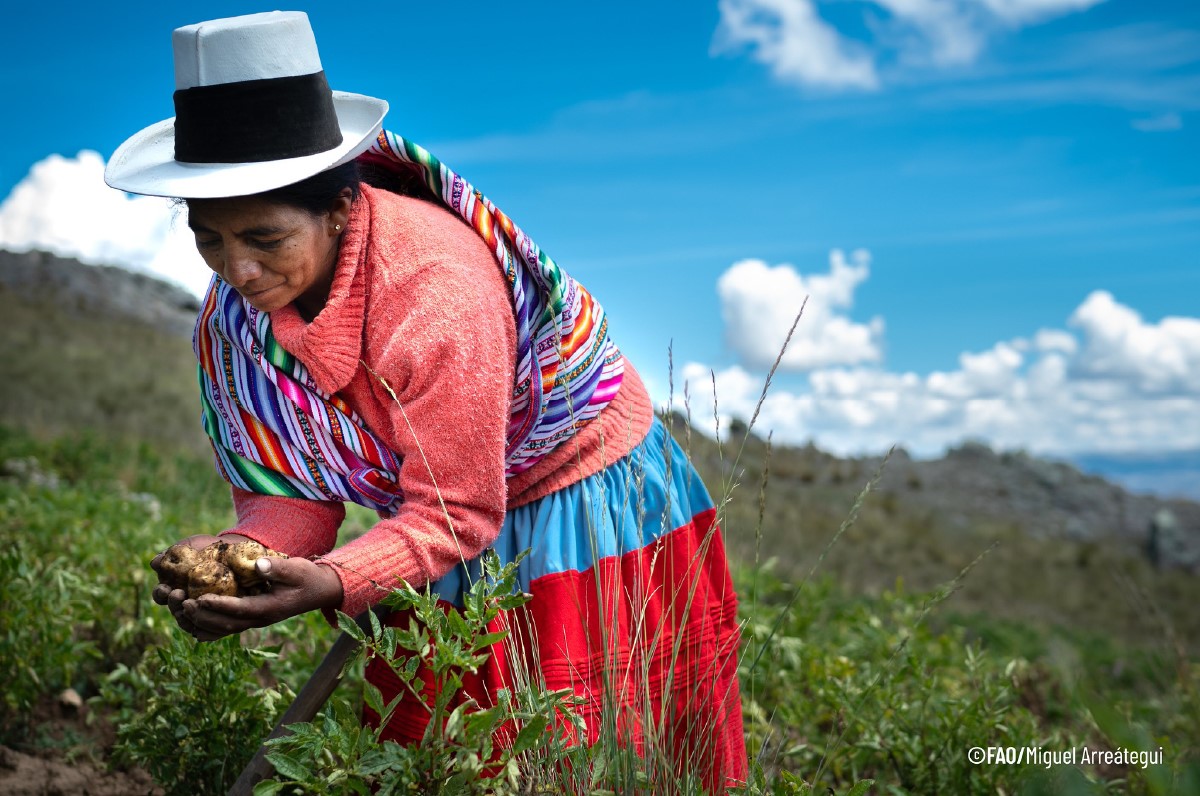
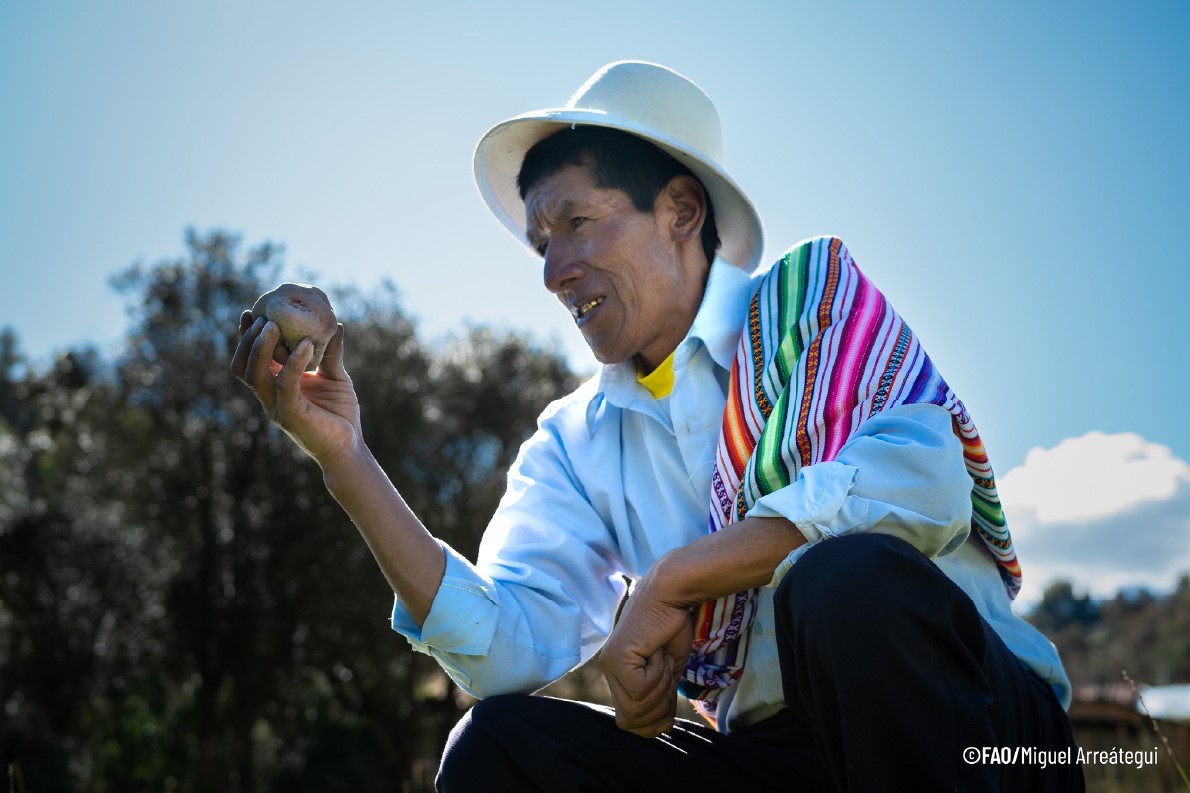
Matilde and Abel grow with their hands what they inherited with their souls: native potatoes. For Matilde, her potatoes are like children, each one with its own name, color and spirit. Abel dreams of having his own processing plant and of seeing his children running the cooperative.
Irineo Núñez Vargas, a producer from the community of Pomavilca and a member of the Unión Pomavilca Association, smiles broadly when he speaks about his native potatoes. “It’s an emotional experience to see our potatoes traveling around the world. Before, they were not known, today they are part of snacks that reach other countries”, he says joyfully. The association, located in Acobamba (Huancavelica), began with a small group of community members who believed in the value of their product. Today, more than a hundred producers have joined the collective effort to supply Tiyapuy, a company with which they signed a commercial contract thanks to the coordination process promoted by Agromercado under the Hand-in-Hand Initiative.
“We are already delivering four potato varieties to the Tiyapuy plant. It’s a fair market, with stable prices, and that allows us to plan, invest and grow as a community”, he explains. Irineo emphasizes that this partnership not only improves their income but also motivates them to enhance quality and dream big: “We want our own collection and selection facility. For now, we improvise in a small space, but we are moving forward. The most valuable thing is that now we feel it is possible, and that we are not alone”. His enthusiasm is contagious, as is his conviction: “Native potatoes are a source of pride for Peru. And Tiyapuy, by investing in them, is investing in all of us”.
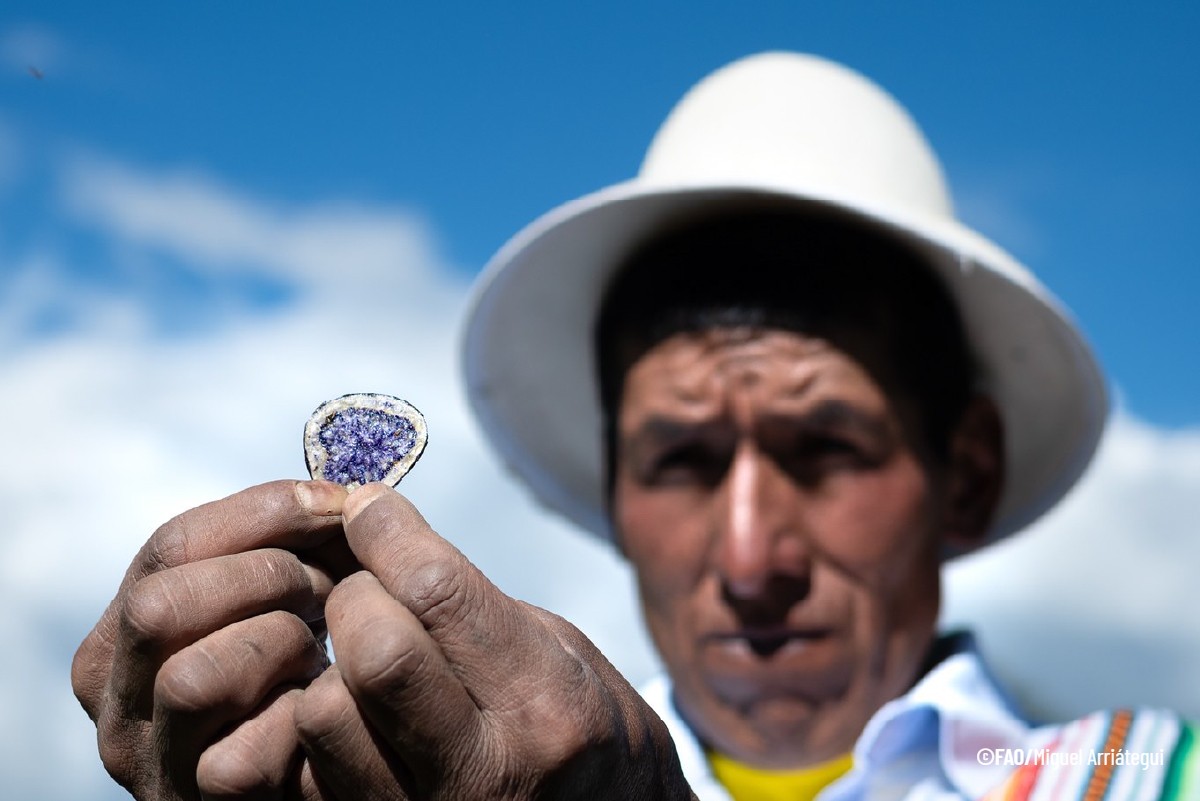
The stories of Matilde, Abel and Irineo show how the Hand-in-Hand Initiative is driving a new model that connects producers with fair markets, private-sector partners and technical support to transform family farming.
Investing in development hand in hand with the land
The stories of Matilde, Abel and Irineo are not isolated cases. They represent a new paradigm driven by the Hand-in-Hand Initiative, a FAO strategy that seeks to accelerate sustainable rural development and agricultural transformation through high-impact investments in vulnerable
territories. This initiative places farmers at the center, recognizing their role not only as producers, but also as key actors in poverty eradication and food security.
Thanks to their participation in business roundtables promoted under this initiative, and with partners such as the snack company Tiyapuy, these producers gained access to end buyers through fairer negotiations for their crops. They established connections with supermarkets, social programs and private companies that value quality, origin and the effort behind each product. Technical support has made it possible not only to improve post-harvest handling and market presentation, but also to strengthen their self-esteem, leadership and entrepreneurial vision.
“Giving a hand” is not just a slogan: it is a starting point. Through the Hand-in-Hand Initiative, strategic investments are being coordinated to scale up these impact stories. Today, stakeholders are being connected —from programs of the Ministry of Agrarian Development and Irrigation (MIDAGRI), regional and local governments, to cooperatives and private companies such as Tiyapuy— with a shared goal: unlocking the productive potential of native potatoes, improving access to quality seeds and promoting family farming as a cornerstone of a sustainable future for the entire country.