


Stories that heal the land: voices of resilience in Latin America and the Caribbean
Women from Venezuela, Chile, and Guyana demonstrate the ability of communities to overcome the impacts of climate change, environmental degradation, and pressure on natural resources by restoring, adapting, and rebuilding.


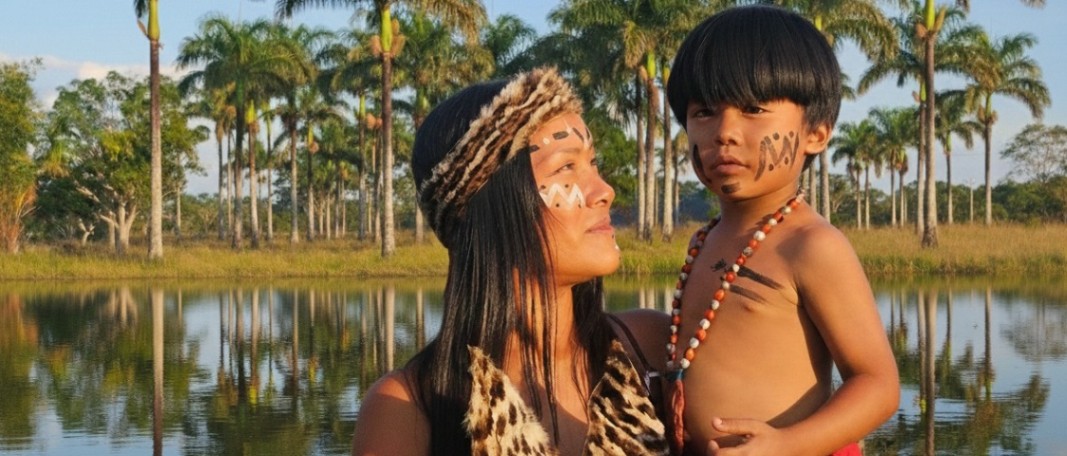
Alejandra Loyola, from Venezuela, takes part in an initiative that restores degraded areas while strengthening local capacities and reviving ancestral knowledge.
FAO/Gabriela Biasco
22/04/2026
In Latin America and the Caribbean, land is food, memory, identity, and future. The region is home to nearly 60% of the world’s terrestrial biodiversity, 46% of its tropical forests, and one-third of its available freshwater. But this richness is now under threat: one-third of arable land is degraded, and half of productive soils face erosion. In this fragile balance, the health of ecosystems also defines the well-being of those who depend on them.
Stories like Alejandra’s in Venezuela’s Gran Sabana, Gloria’s in southern Chile, and Niskisha’s in the mined lands of Guyana reflect the impacts of climate change, environmental degradation, and pressure on natural resources.
Through initiatives led by the Food and Agriculture Organization of the United Nations (FAO), together with governments, communities, and partners, the restoration of soils, forests, and biodiversity becomes an opportunity to recover livelihoods, strengthen cultures, and protect the future—demonstrating that healing the land is not only an environmental task, but a deeply human act. That is why the call of International Mother Earth Day is to restore ecosystems in order to live in harmony with nature and build development that works for both people and the planet.
From a lineage of chiefs to healing Venezuela’s Gran Sabana
In the community of Santa Cruz de Mapaurí, in Venezuela’s Gran Sabana, lives Alejandra Loyola, a nurse and heir to a lineage of chiefs from the Pemón Indigenous people. Her life unfolds between caring for health and defending her territory, now threatened by mining, forest fires, and the gradual loss of cultural identity in one of the region’s most fragile ecosystems.
From the Council of Elders, Alejandra promotes spaces where children and youth listen to the memory of their people. For her, preserving culture is also a way of protecting the land. However, pressure on already vulnerable soils has accelerated degradation, affecting both biodiversity and the community’s livelihoods.
In response, the project “Conservation and sustainable use of biological diversity in the Caroní River basin,” implemented by the Ministry of People’s Power for Ecosocialism, with FAO technical assistance and funding from the Global Environment Facility (GEF), seeks to restore degraded areas, strengthen local capacities, and revive ancestral knowledge.
In Santa Cruz de Mapaurí, this translates into nurseries for restoration and agroforestry systems, restoration of native species, and the creation of the Indigenous Community Brigade for Integrated Fire Management—a direct response to one of the territory’s greatest risks. The school in Mapaurí is home to one of the three “arboretums” established by the project in the area. Trees of the greatest cultural significance to the indigenous people—including medicinal and edible species—are brought there from deep within the forest to the community for seed production. “We see that local fruits are recovering and there is a greater presence of animals. The project has managed to integrate technical knowledge with respect for the ‘parent trees,’” says Alejandra.
For her, the impact is profound: it is not only about restoring the forest, but about healing the bond between her people and nature. Her work as an educator and leader ensures that new generations grow up with pride in their culture and commitment to their territory.


Gloria Suazo looks with hope at the ecological restoration of Corcovado National Park, where the forest is once again becoming a symbol of protection, balance, and future. ©FAO
Memory, resilience, and hope in forest restoration in southern Chile
Gloria Suazo was born on the shores of Lake Yelcho, in Villa Santa Lucía, in southern Chile, at a time without basic infrastructure. Today, as president of the neighborhood association, her story is marked by the landslide of December 16, 2017—a disaster that changed the life of her community.
That day, intense rainfall caused the collapse of a rock wall onto a glacier, triggering an avalanche of mud, ice, and rocks that rushed down the Burritos River basin, sweeping away homes, infrastructure, and vegetation. The catastrophe, originated about 10 kilometers from Villa Santa Lucía, within Corcovado National Park, left a deep mark on the territory and exposed the area’s vulnerability to extreme events.
Six years later, the +Bosques Project—implemented by FAO together with Chile’s National Forestry Corporation and funded by the Green Climate Fund (GCF)—is working to restore native forests in affected areas of Corcovado National Park. Its goal is not only to recover the ecosystem, but also to strengthen community resilience to climate change.
For Gloria, restoration has a clear purpose: safety. “If we manage to stabilize the upper areas with native forest, that will protect those of us living below,” she explains. Forest recovery thus becomes a natural barrier against future disasters.
Today, progress is becoming visible and is also helping rebuild trust. “This work is a way of bringing life back to the village. Seeing the forest grow again gives us hope,” she says. In a territory marked by the memory of the landslide, ecological restoration is also helping to mend the social fabric and rebuild confidence in the future.

In fields that once struggled to produce anything at all, a new kind of harvest is beginning for Niskisha Punch: one rooted in resilience and innovation. ©FAO/Arafat Fazlay
From restored lands to food on the table in Guyana
In Region Four of Guyana, Niskisha Punch, a farmer and mother, walks at dawn along rows of crops that until recently seemed impossible to grow. For years, her community faced eroded soils, poor drainage, and declining productivity—direct consequences of mining activities. This reduced income opportunities and affected the food security of many families.
To reverse this situation, the “Sustainable Land Development and Management (SLDM)” project was implemented, led by FAO in collaboration with national institutions and funded by the Guyana REDD+ Investment Fund. The initiative promotes land restoration and climate-smart agriculture through practical, science-based solutions.
Today, Niskisha works in a shade-house greenhouse installed on land degraded by mining activities, transforming a landscape of loss into a source of life and livelihood. “This facility is giving us the opportunity to produce more, achieve better food security, and have more money in our pockets,” she says.
Other project actions include planting vetiver grass to stabilize soils, using biochar, vermicomposting, and cultivating dragon fruit, along with training in agroforestry and conservation. These practices help restore land productivity and strengthen local capacities.
The results are already visible across different regions of the country: lands beginning to regenerate, trained farmers, and new economic opportunities. For Niskisha, the change is also emotional: where there was once uncertainty, there is now confidence. “Now we have more food security and hope,” she says.
Her story reflects a broader transformation: with the right support, even the most degraded territories can once again sustain life, protect communities, and open new opportunities for the future.
These three stories show something powerful: the capacity of communities to restore, adapt, and rebuild when they have the knowledge, tools, and support they need.