


FAO initiates Project Cycle Management Training for Agronomists
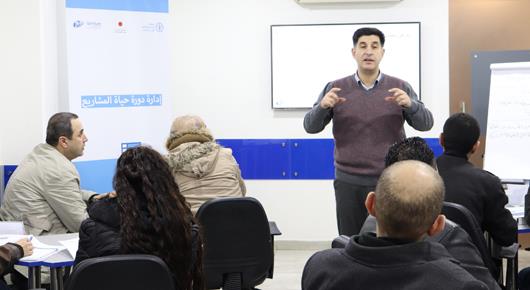
Damascus - 24 February 2020: One of the biggest challenges facing agriculture in the Syrian Arab Republic is the need for comprehensive programmes and projects to help recovery across the sector, after almost ten years of crisis. There has been major physical damage caused by the war – to buildings, equipment and other facilities; but less tangibly, human capacity has been weakened by emigration and the loss of technically skilled individuals in extension, irrigation services and agricultural research. There is a need for reconstruction to restore irrigation, strengthening institutions and rebuild capacity. On a more positive note, efforts at recovery in the agriculture sector also offer an opportunity to “build back better”, and not simply return to the status quo before the crisis.
Within this context, there will be initiation of programmes and projects, therefore; there will be a need for individuals with skills in agriculture-related project design and implementation, including monitoring and evaluation of project progress and outcomes.
FAO and the Government of Japan are collaborating to improve Syrian human capital by enriching sector specialists’ technical knowledge with managerial skills. More than 80 agronomists are currently receiving a course on project cycle management and results-based management developed in association with a leading Syrian business training and consulting organization, Venture Training Center in Damascus.
The training allows trainees to develop sample project designs, including conceptually how to implement and monitor, using “real-life” examples proposed by the Ministry of Agriculture and Agrarian Reform.
“FAO has been focusing on technical capacity building as a development priority to boost agriculture in Syria,” Said Mike Robson – FAO Representative in the Syrian Arab Republic.
“This training will change the thinking methods towards the planning of sustainable, well-executed projects and programs within the sector. It will definitely contribute to the improvement of the country’s agriculture situation once the technicians can develop innovative projects based on needs,” he added.
The project cycle management training covers topics related to needs assessments and stakeholder analysis and engagement; linking needs assessments to project identification; risks and assumptions; understanding financials; monitoring and evaluation tools and other topics.