


Japan Boosts FAO Water and Agricultural Assets Conservation Efforts in Yemen
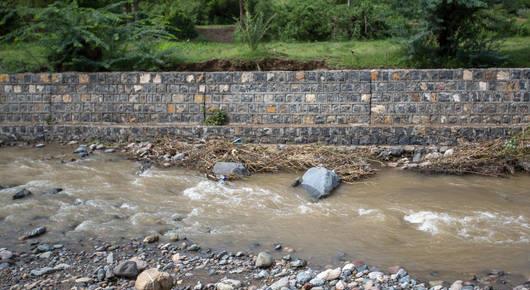
A wall constructed in a farm to protect it from the torrents. ©FAO/Yemen
Sana’a, March 7, 2020- A new project, supported by The Government of Japan and carried out by the Food and Agriculture Organisation of the United Nations (FAO) in Yemen, is addressing socio-economic and human security by mainstreaming the role of women in peacebuilding through a natural resources management approach. The new one-year project will invest USD 909 090 and aims to reach about 5 000 households of farmers and agricultural workers in the catchment area of Wadi Bana of 7 600 square km, which extends over five governorates including (Ibb, Albayda, Aldal’a, Lahj and Abyan).
The project aims to bridge the divide between water resources in Wadi Bana and the need for sustainable agricultural irrigation. Challenges to water access will be addressed through promoting shared rights to water resources, common benefits and facilitating inclusive water resource management through Women-led Water User Groups (WWUGs).
Further, the project promotes socio-economic human security through fair access to water and food, and reconciliation among local stakeholders across social and political divides, supporting development of a water governance system. Ultimately, the project will create agriculture-based employment opportunities for youth to give them a viable alternative to joining armed groups.
In August 2019, Wadi Bana experienced major floods that claimed human lives and caused widespread crop damage and losses, leaving many farmers without means of livelihood. To avoid such loss, the project will conduct infrastructure rehabilitation work based on technical assessments as well as introducing efficient and sustainable farming and irrigation practices to increase communities’ resilience to shocks.
“Thanks to Japan’s support, by the end of this project, the risk of flooding and soil erosion will be decreased by 18 percent. The whole community, especially the farmers who are at risk while getting water for irrigation, will be protected from floods after the rehabilitation/construction of this water infrastructure.
FAO and Japan also recognize women’s critical role as agents of change and peacebuilding by empowering them to take a leading role in Yemen’s water resources governance”, said Hussein Gadain, FAO Representative in Yemen.
Irrigated agriculture is the primary source of food, employment and economic activity in Yemen. However, water scarcity, poor management capacities of water resources, inadequate maintenance due to conflict, limited social cohesion among water users and weak governance – compounded by natural disasters – caused the most significant constraints to increasing food production. In Yemen, more than half the population requires food assistance, and as per the latest IPC Hot-spot analysis a total of 1 246 500 people are still severely food insecure.
Conflicts over Scarce Water Resources
Yemen’s limited and poorly managed water resources, combined with the impacts of climate change, have hindered availability of food. The necessity of increased agriculture production has resulted in an intensification of disputes between tribes and villages over control of natural resources. Violence over land and water in Yemen is a pervasive and recurring phenomenon that claims thousands of lives each year and severely inhibits social and economic development. According to the Ministry of Interior’s estimates, water-related conflicts result in over 4 000 deaths annually.
The project contributes to enhancing community stability/social cohesion, and increasing economic access and agricultural employment opportunities, thus reducing the number of young people joining armed groups participating in the country’s conflict.
FAO and Japan’s work in Yemen spans varied investments supporting food access, sustainable value chains and promoting natural resources managements by equipping farmers, women and youth with required tools and technologies to achieve #ZeroHunger.