FAO's holistic approach tackles food insecurity and builds resilience in conflict-affected counties
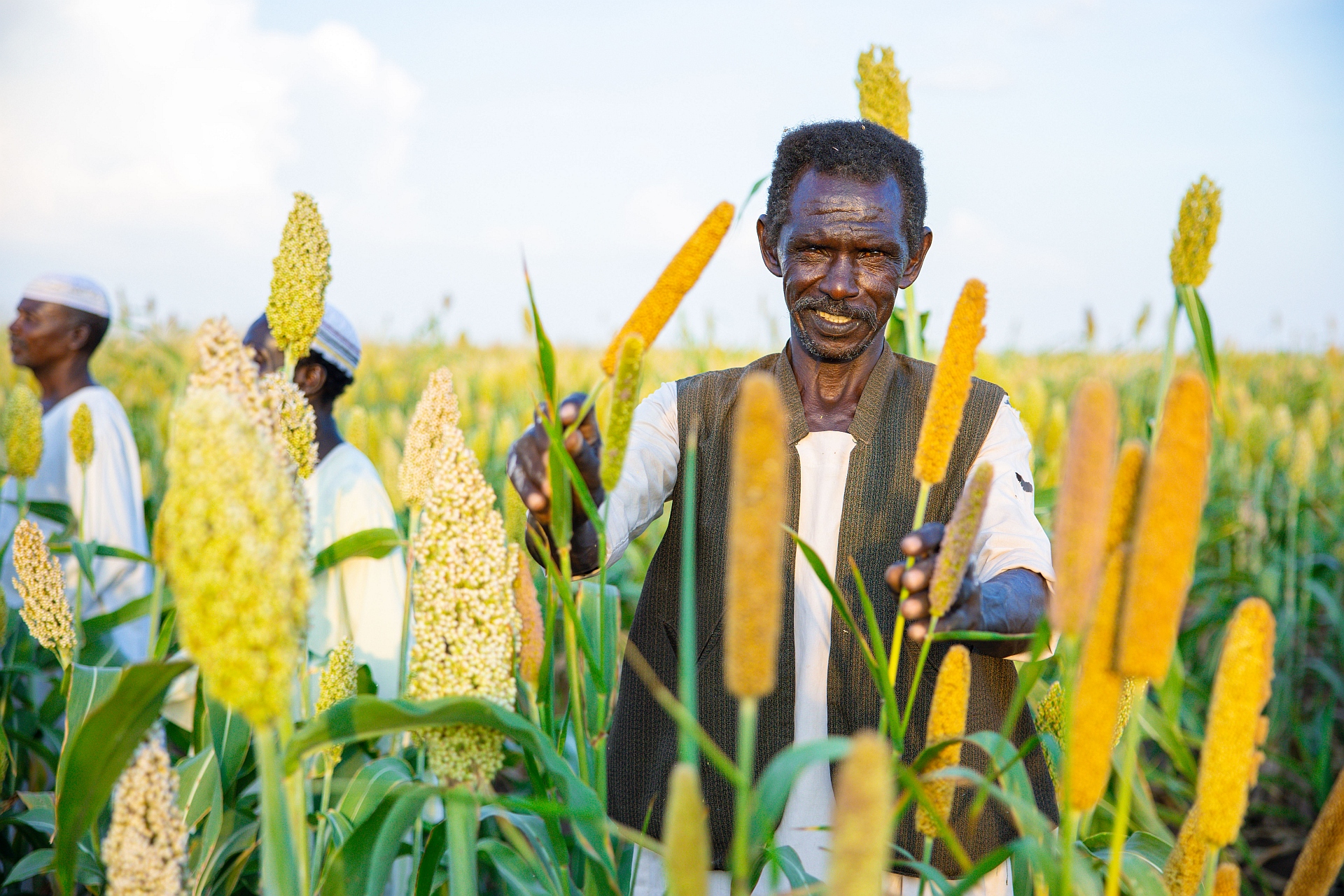
A farmer displays his millet crops, symbolizing resilience and hope after a challenging season in Gedaref, Sudan.
©FAO/Mahmoud Shamrouk
The Food and Agriculture Organization of the United Nations (FAO) continues to provide emergency relief combined with development and peacebuilding efforts in conflict-affected countries in the Near East and North Africa (NENA) region.
According to the recently published regional Food Policy Monitoring Bulletin, conflicts in the NENA region have severely undermined food security, disrupting agricultural production, destroying infrastructure, displacing populations, and weakening local economies. These challenges have pushed millions into acute hunger.
The bulletin highlights that conflicts remain the primary driver of hunger in the region, which currently hosts the largest number of conflicts worldwide and bears the highest costs of violence.
International efforts led by FAO aim to provide emergency assistance, rebuild agricultural systems, and create long-term resilience. However, the scale of the regional crises underscores the need for comprehensive, sustained interventions that integrate emergency relief with development and peacebuilding efforts. This humanitarian-development-peace (HDP) nexus approach is essential for tackling the structural issues driving both conflict and food insecurity, ensuring that affected populations are not only fed but also supported to rebuild resilient food systems.
“Addressing food insecurity in the NENA region requires coordinated responses, substantial financial support, and long-term strategies that prioritize resilience-building, environmental sustainability, peacebuilding, and social stability to break the cycle of hunger and conflict,” highlighted Ahmad Mukhtar, FAO’s Senior Economist for the Near East and North Africa.
The recent bulletin notes that world food prices increased this year. However, in most countries of the region, food prices show a moderate accelerating or decreasing trend. Early-season dry conditions are causing concern about crop establishment, and conflicts continue to reduce yield outcomes in countries such as Sudan, the Syrian Arab Republic, and Yemen.
The policy monitoring section of the bulletin highlights efforts to increase the domestic production of strategic crops (such as wheat, barley, and corn in Algeria; wheat and sugar cane in Egypt; wheat and rice in Iraq; and wheat in Oman and Saudi Arabia), as well as fertilizers (Egypt, Iraq, Qatar, and Saudi Arabia). Countries are also expanding grain silo capacities (Algeria, Egypt, and Iraq). Egypt has increased the price of both locally procured and imported wheat, while Iraq has raised the import price of fertilizers to support domestic producers.
Climate change has affected the quality and quantity of agricultural produce. Countries in the region are implementing several climate change adaptation and mitigation measures, such as building climate-controlled greenhouses (Oman, Qatar, and the United Arab Emirates), reforestation (Lebanon and Oman), reducing the production of water-intensive products (e.g., rice in Egypt), modernizing irrigation infrastructure, including building dams and increasing wastewater use (Morocco and Oman), and desalination (Tunisia).
Many countries in the region performed well in the 2023/24 season in exporting agricultural commodities. Egypt exported citrus fruits, potatoes, onions, grapes, and beans, while Morocco exported fruits and vegetables. Morocco lifted its export ban on potatoes and onions to African countries, while Jordan restricted the exports of tomatoes to stabilize domestic prices.
Countries are also diversifying their wheat imports to increase the resilience of supplies, with Egypt importing from Türkiye, and Morocco and Tunisia from Russia. The United Arab Emirates has completed negotiations with Australia, Chile, Morocco, and New Zealand for a Comprehensive Economic Partnership Agreement to boost trade and investment across sectors.