


FAO, ICESCO and IOFS call for urgent action on soil health and climate resilience in Sub-Saharan Africa and West Asia
©FAO
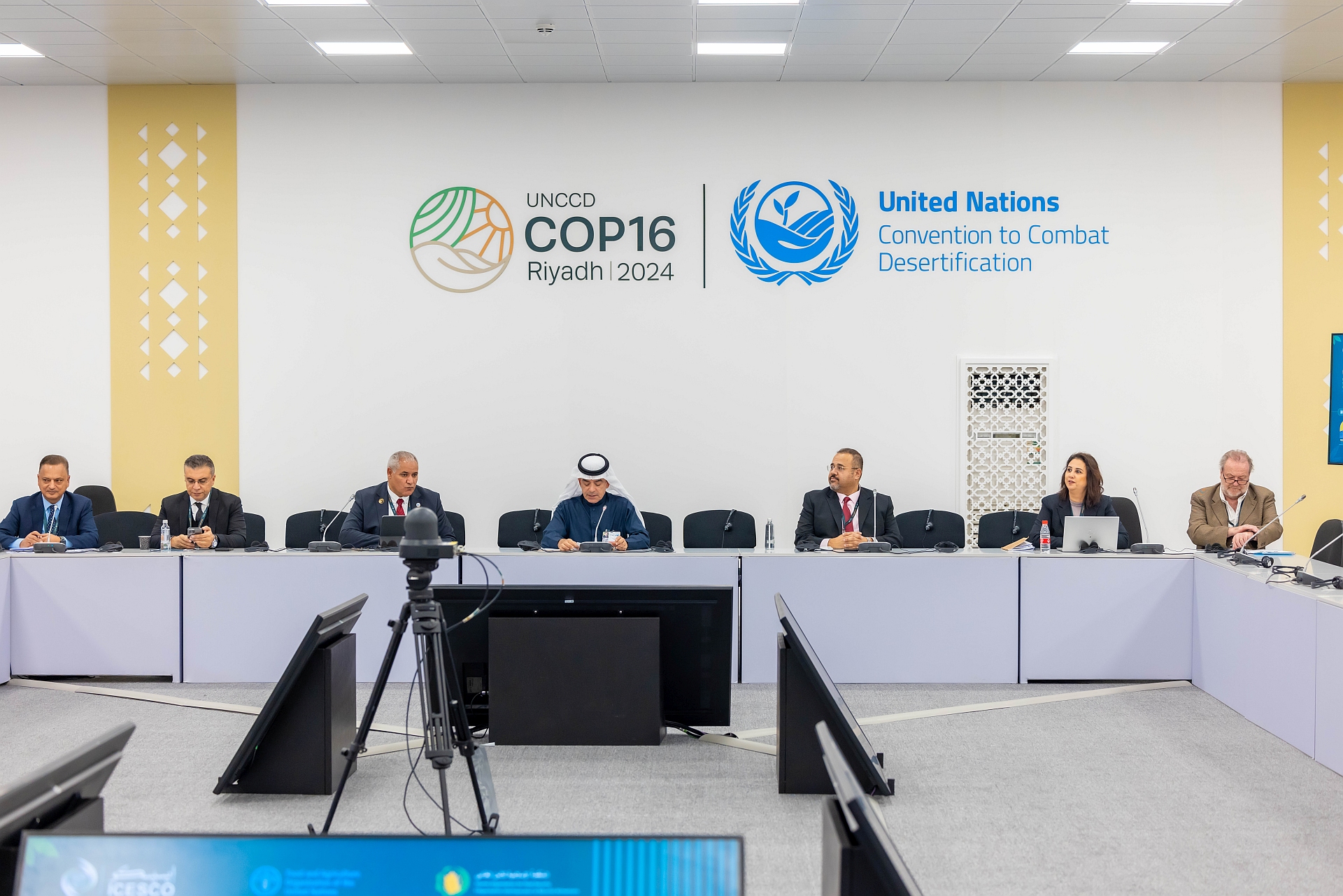
The COP16 Pavilion in the Blue Zone hosted a critical panel discussion on “Strengthening soil health and climate resilience: sustainable forest and land management in Sub-Saharan Africa and West Asia.” The event, jointly organized by the Food and Agriculture Organization (FAO), the Islamic World Educational, Scientific and Cultural Organization (ICESCO), and the Islamic Organization for Food Security (IOFS), brought together leading experts and policymakers to address the region’s escalating challenges of land degradation, biodiversity loss, and climate impacts.
Dr. AbdulHakim Elwaer, Assistant Director- General and Regional Representative for the Near East and North Africa, opened the discussion by emphasizing the scale of the challenges faced in the region. “Land degradation in our region continues to accelerate due to the impacts of climate change, recurring droughts, unsustainable agricultural practices, overgrazing, and deforestation,” he stated. “The economic losses are staggering, exceeding $9 billion annually between 2000 and 2015, representing approximately 7 percent of the region’s GDP. Yet, we must remember, this is not just an environmental crisis—it is a humanitarian one, as it directly impacts food security, livelihoods, and community resilience.”
The panel explored integrated strategies to address soil health and land degradation, focusing on nature-based solutions such as sustainable grazing, reforestation, and regenerative agriculture. Discussions also highlighted the importance of investing in agrifood systems transformation and ensuring that funding effectively reaches agricultural communities.
The panel featured insights from leading experts, including Dr. Sakhoudia Thiam from the Pan African Agency for the Great Green Wall, who underscored the critical role of restoration efforts in enhancing climate resilience. FAO’s Senior Programme Officer, Ms. Fidaa Haddad, detailed FAO’s regional action plan for sustainable soil management, highlighting recent achievements such as the Muscat Communiqué and the newly published report: Regional action plan for sustainable soil management in the Near East and North Africa region.
Technology and innovation also took center stage, with panelists discussing the potential of remote sensing and other data-driven tools in improving land management. Prof. Dr. Hesham ElAskary, Advisor to the Director General of ICESCO, stressed the importance of measurable indicators in assessing the success of restoration programs.
The session concluded with a message on the need for action and regional collaboration. Dr. Elwaer underscored the urgency of collective efforts, stating, “As we face these significant challenges, partnerships and regional cooperation are crucial for scaling up land restoration. Only by harnessing regional knowledge and fostering collaboration can we turn obstacles into opportunities and drive meaningful change.”
The panel discussion, which included an interactive session with participants, emphasized the transformative potential of sustainable land management practices in achieving climate resilience and fostering sustainable development. It served as a pivotal moment for advancing commitments under the UN Decade on Ecosystem Restoration and aligning ecological restoration with economic development and community well-being.