


FAO Strengthens Plant Protection Systems to Support Food Security in the Arab World
©FAO
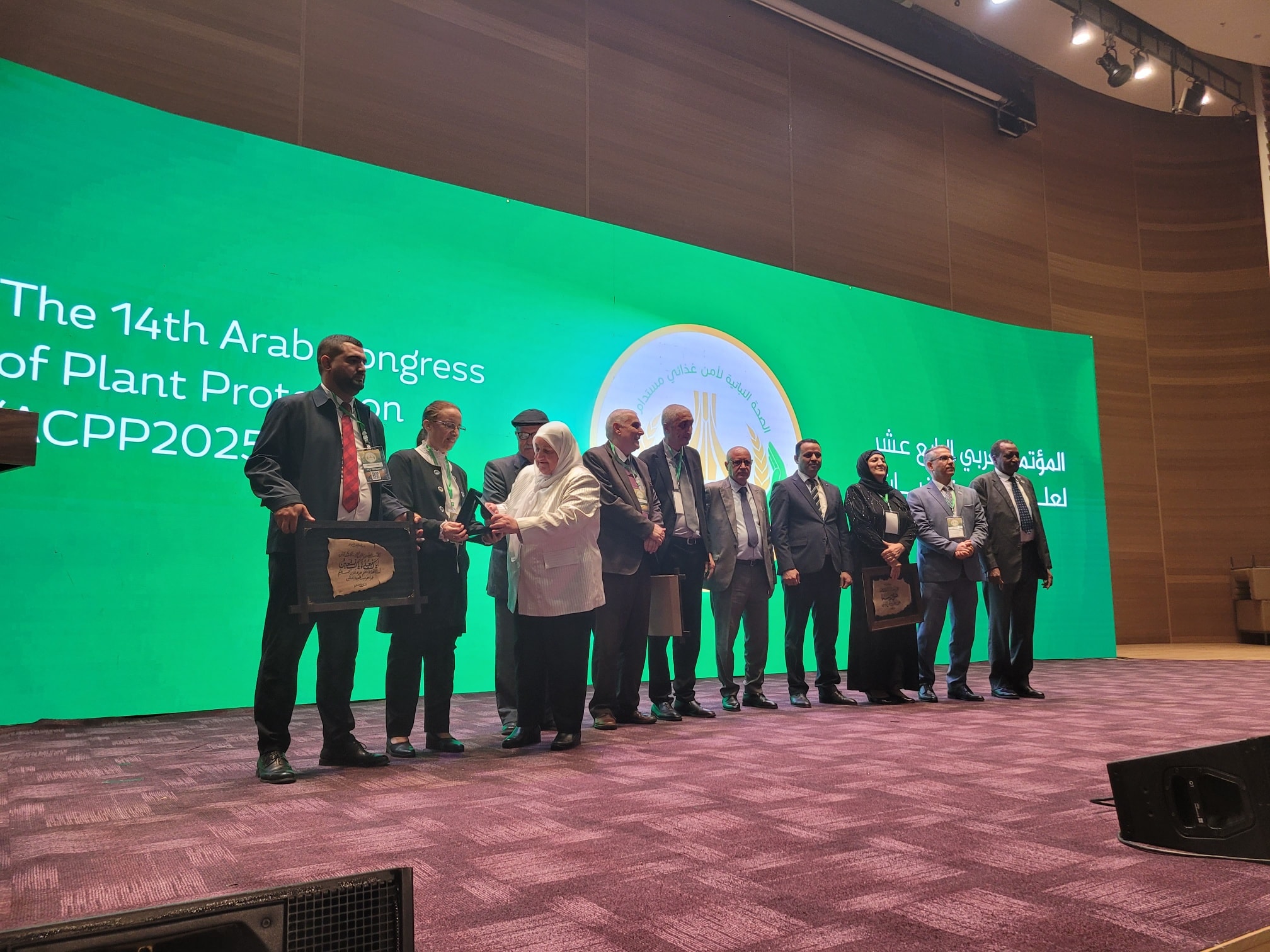
The Food and Agriculture Organization of the United Nations (FAO), in cooperation with the Arab Society for Plant Protection (ASPP), successfully supported the organization of the 14th Arab Congress of Plant Protection, a five-day regional forum held in El-Harrach, Algeria, from 3–7 November 2025 under the theme “Plant Health for Sustainable Food Security.” FAO’s high-profile involvement, including keynote addresses, technical symposia, and coordination meetings, raised the visibility of plant health issues and catalyzed strategic outcomes in policy influence, knowledge exchange, and regional cooperation on transboundary plant pests and diseases. The Congress brought together about 650 plant protection experts, researchers, policymakers, National Plant Protection Organizations (NPPOs), and practitioners from the Arab region, Near East, and North Africa (NENA), providing a high-level platform to strengthen partnerships and harmonize regional responses to plant health threats and sustainable food security.
High-Level Opening Underscores Food Security and Innovation
The Congress was inaugurated by H.E. Yacine El-Mahdi Oualid, Minister of Agriculture, who emphasized the need to translate scientific research into actionable agricultural policies and called for adopting digital and precision agriculture tools, including AI-powered early warning systems for pest outbreaks. H. E. announced the upcoming launch of a national plant gene bank to support the development of climate- and pest-resilient crop varieties. The Minister also underscored the importance of regional cooperation to address invasive pests and commended ASPP for organizing the Congress.
FAO Leadership Highlights Plant Protection for Food Security
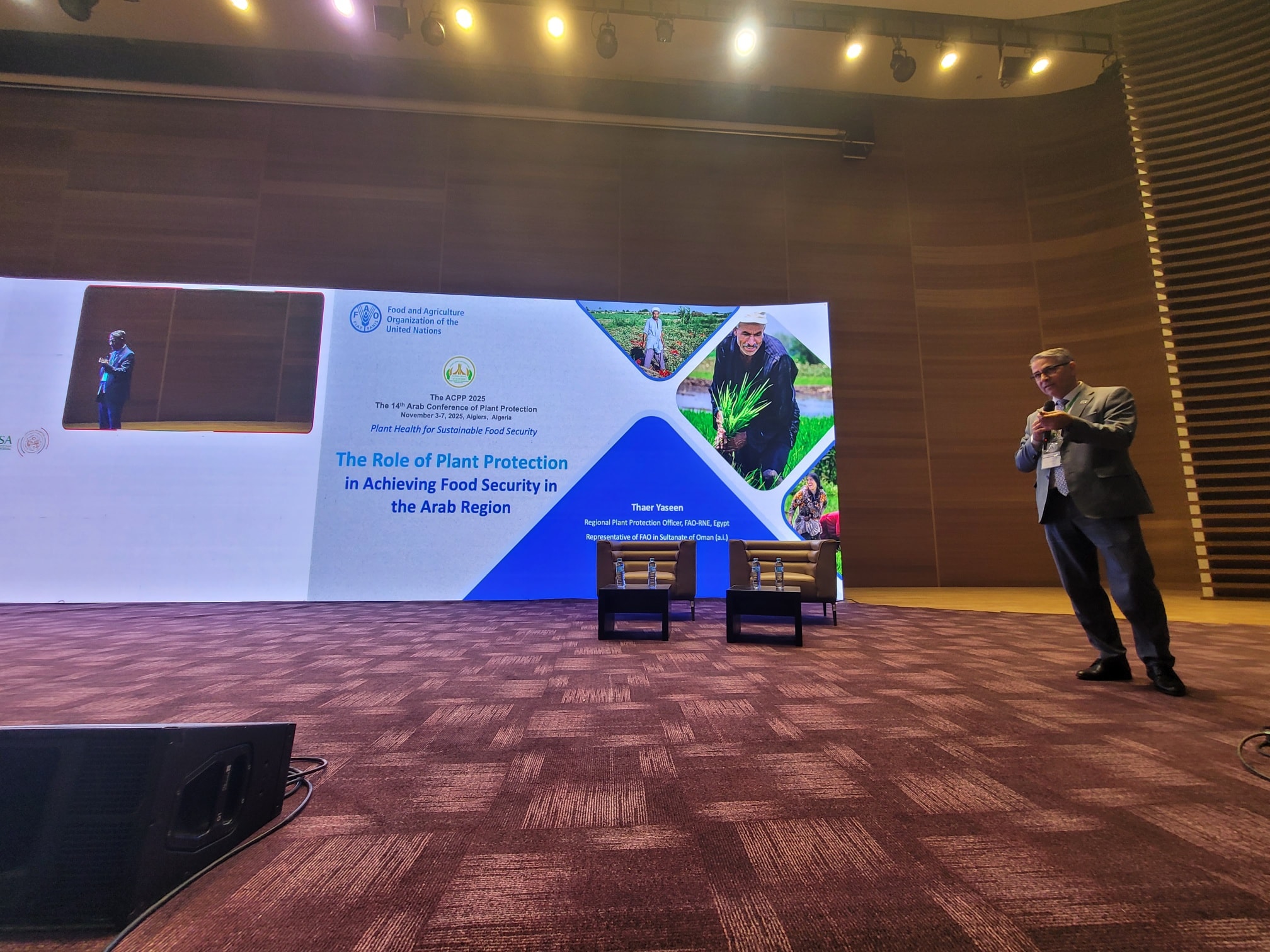
A cornerstone of FAO’s participation was the keynote address on “The Role of Plant Protection in Achieving Food Security in the Arab Region,” delivered by Mr. Thaer Yaseen, FAO Regional Plant Protection Officer, on behalf of Mr. Abdelhakim El-Waer, FAO Assistant Director-General and Regional Representative for the Near East and North Africa. He outlined the challenges facing agri-food systems in the region, including climate change, water scarcity, conflict, and pest outbreaks, noting that approximately 66.1 million people experienced hunger in 2023, while 186.5 million faced moderate or severe food insecurity. He emphasized that combating pests requires implementing integrated pest management systems and enforcing phytosanitary legislation, linking plant health directly to the Sustainable Development Goals—particularly Zero Hunger and Sustainable Agriculture.
FAO’s participation also highlighted the importance of phytosanitary measures in limiting the spread of transboundary plant pests in the Near East and North Africa region. The presentation emphasized the shared challenges across the area and the need for regional coordination and harmonized phytosanitary procedures, including early diagnosis, pest risk analysis, and plant certification programs, all within the framework of FAO’s regional plant health strategy.
Addressing Critical Plant Health Challenges in the Arab Region
The event, held under the theme “Plant Health for Sustainable Food Security,” served as a high-level platform to discuss urgent challenges in plant protection across the Arab and NENA regions. Presentations featured emerging research areas in plant protection and showcased cutting-edge technologies to enhance pest management and crop resilience. Discussions focused on the impacts of climate change, invasive pests, and diseases, and the pressing need to strengthen agricultural quarantine systems. Senior officials from the Ministry of Higher Education and Scientific Research emphasized the importance of integrating academic research with agricultural innovation to advance evidence-based and sustainable plant protection solutions.
Technical Symposia Showcase Innovations and Regional Strategy
FAO co-organized three specialized symposia spotlighting innovation and collaboration in plant protection. The sessions covered AI-driven pest management, climate-resilient crop breeding, invasive pest control, and strengthening phytosanitary systems. Experts presented advanced tools, including remote sensing, high-throughput molecular diagnostics, and biocontrol technologies. These symposia supported implementation of the FAO Regional Strategy for Sustainable Management of Transboundary Plant Pests and Diseases in the NENA Region, promoting regional coordination, information exchange, and capacity building.
Strengthening Partnerships and Regional Coordination
FAO’s engagement emphasized collaboration and partnership-building, co-organizing the event with ASPP and Algerian national institutions. Partnerships were reinforced with NEPPO, CIHEAM Bari, AOAD, ICARDA, CGIAR, and the University of California, Davis, ensuring continued cooperation in pest surveillance, quarantine harmonization, and climate-resilient agriculture.
The Congress also served as a coordination platform for NPPOs, enabling joint planning and data sharing for regional pest management. By the event’s conclusion, regional alliances were visibly strengthened, and participants reaffirmed their shared commitment to advancing plant health and food security.
Capacity Building, Knowledge Exchange, and Way Forward
FAO’s engagement in the Congress had a substantial capacity-building impact through presentations that offered interactive training and knowledge exchange for NPPO staff, researchers, and policymakers. Participants gained hands-on experience with innovative tools, including diagnostic kits, pest forecasting models, plant certification schemes, and biocontrol strategies. The Congress fostered youth participation, with early-career scientists and students actively contributing to discussions and poster sessions—supporting long-term regional expertise in pest surveillance and IPM. As the event concluded, organizers issued actionable recommendations aligned with FAO’s Regional Strategy, setting the stage for strengthened national programs and regional cooperation. FAO’s leadership and partnerships reaffirmed plant health as a pillar of food security and sustainable agriculture in the Arab region.
Key Facts about ACPP 2025
The 14th ACPP brought together over 600 participants and featured 413 research contributions from 23 countries, demonstrating strong regional and international engagement. Algeria led with 63% of submissions reflecting robust national commitment to agricultural research and innovation, followed by Syria (6.3%), Tunisia (5.6%), Iraq and Pakistan (3.6%), Egypt (2.2%), and Sudan and Saudi Arabia (1.7%). Contributions from France, Italy, the UK, the USA, Russia, and India added a global dimension to the event.
The scientific program included 213 oral and 200 poster presentations across 26 thematic areas, with leading topics such as biological control, plant extracts, fungal diseases, economic entomology, and pest surveillance—highlighting a shift toward sustainable, science-based pest management.
FAO-supported symposia, youth research initiatives, and interactive workshops reinforced the Congress’s role as a regional hub for innovation, collaboration, and capacity building in plant protection.
About ACPP
The Arab Congress of Plant Protection (ACPP), organized by the Arab Society for Plant Protection (ASPP), is the region’s leading scientific forum for plant health. Since 1980, it has convened every three years in a different Arab country, bringing together researchers, policymakers, and practitioners to share innovations and address emerging challenges in plant protection.