


Gaza Strip: Amid ceasefire, FAO helps herders protect remaining livestock, combat malnutrition
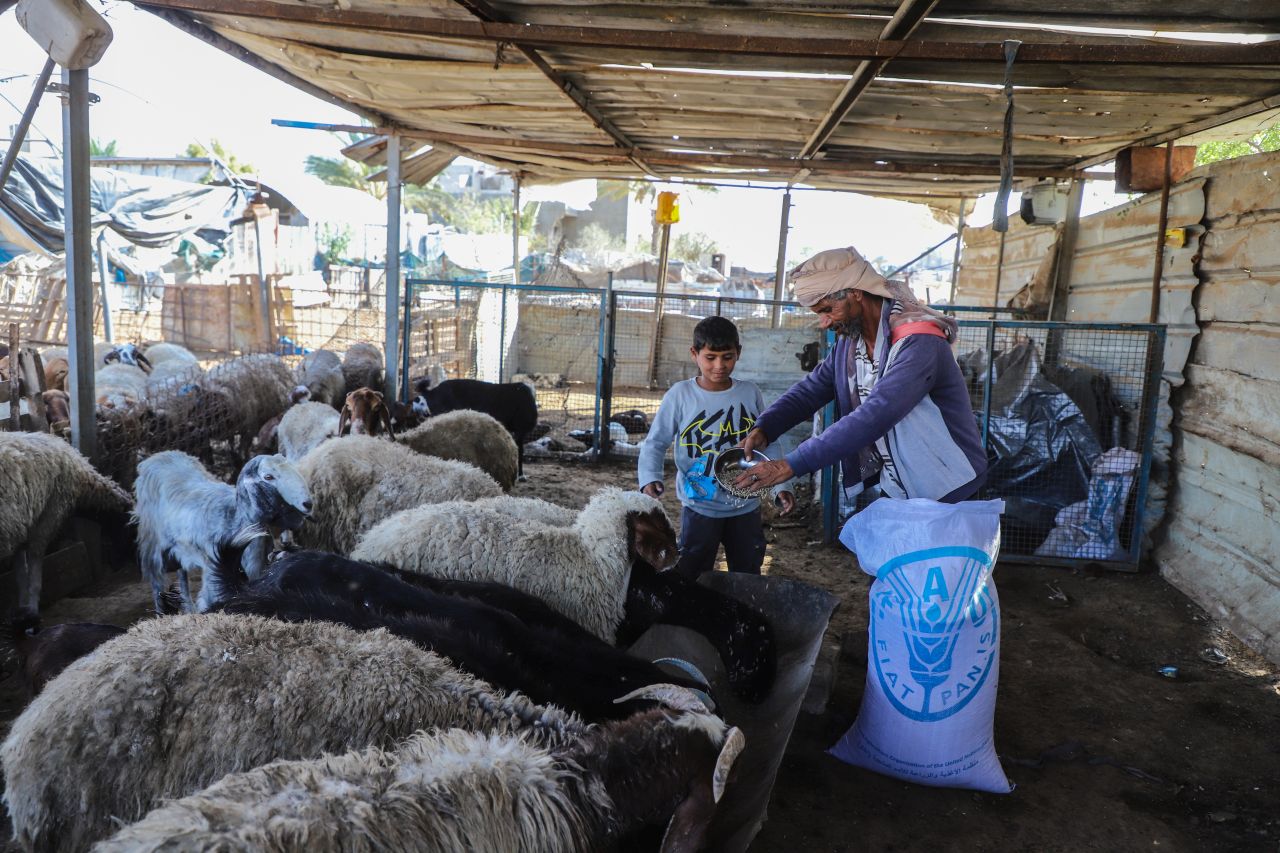
Jerusalem/Cairo – With winter approaching, the Food and Agriculture Organization of the United Nations (FAO) is helping approximately 2 000 families in the Gaza Strip that still have small ruminants (sheep and goats) to protect their livestock and combat acute malnutrition.
FAO’s assistance package includes emergency fodder distributions, veterinary kits, and cash assistance that allows livestock holders to purchase critically needed items such as winterization materials locally.
“FAO’s team in the Gaza Strip has verified about 2 000 livestock holders whose animals have survived the conflict. However, feed is expensive and scarce, animal shelters have been destroyed, and veterinary care and supplies are rare. FAO is seizing on the critical, yet narrow window offered by the ceasefire to protect remaining livestock that may otherwise not survive the winter”, said Ciro Fiorillo, Head of Office, FAO West Bank and Gaza Strip.
An estimated 14 300 small ruminants have survived the conflict, according to a November 2025 FAO assessment. This corresponds to about one-third of goats and 20 percent of sheep. These animals are among the Strip’s last-remaining local sources of fresh milk and meat. Their continued survival is essential to combating malnutrition, especially for children, following two years of conflict.
Since the ceasefire went into effect on 10 October, FAO has entered 716.41 metric tonnes (MT) of feed into the Gaza Strip, in addition to 60 MT entered in late August. This feed allowed for an emergency distribution of two 50-kilogramme bags to all the remaining livestock holders (100 kg of feed per family). FAO is continuing to distribute the remaining feed equitably among the herders. We have an additional 2 616.39 MT of feed concentrate as well as 3 500 veterinary kits ready to enter. Emergency distributions of feed and veterinary supplies are funded by the Government of Italy.
In November, FAO launched an initiative that is providing all remaining livestock holders with cash to purchase items such as water, veterinary care, shelter, winterization materials, and any locally available feed like straw, hay, bran and vegetable residues. Even when humanitarian and private sector imports remain constrained, cash empowers herders to purchase items based on their animals’ specific needs and their singular knowledge of the local market. FAO’s cash assistance to herders is funded by the Humanitarian Aid and Civil Protection department of the European Commission (ECHO) and the Government of Ireland.
“Preventing further livestock losses – which would be another blow to local livelihoods, food security and nutrition – is and must continue to be a priority in the coming months. We look forward to the time when imports of live animals will be allowed. This will enable us to help restock the herds of at least 3 000 more families that were herding before the conflict, provide poultry and other small animals for backyard gardening, and resume production of eggs and other sources of proteins”, Fiorillo said.
- West Bank and Gaza Strip: Humanitarian response update
- Gaza Strip: Time-critical support to farming households to help reactivate local agrifood production and restore conflict-affected livelihoods
- IPC Acute Food Insecurity and Acute Malnutrition Special Snapshot: April - September 2025
- On the ground in Gaza