


Strengthening Plant Protection to Reduce Mycotoxins: One Health Imperative
©FAO
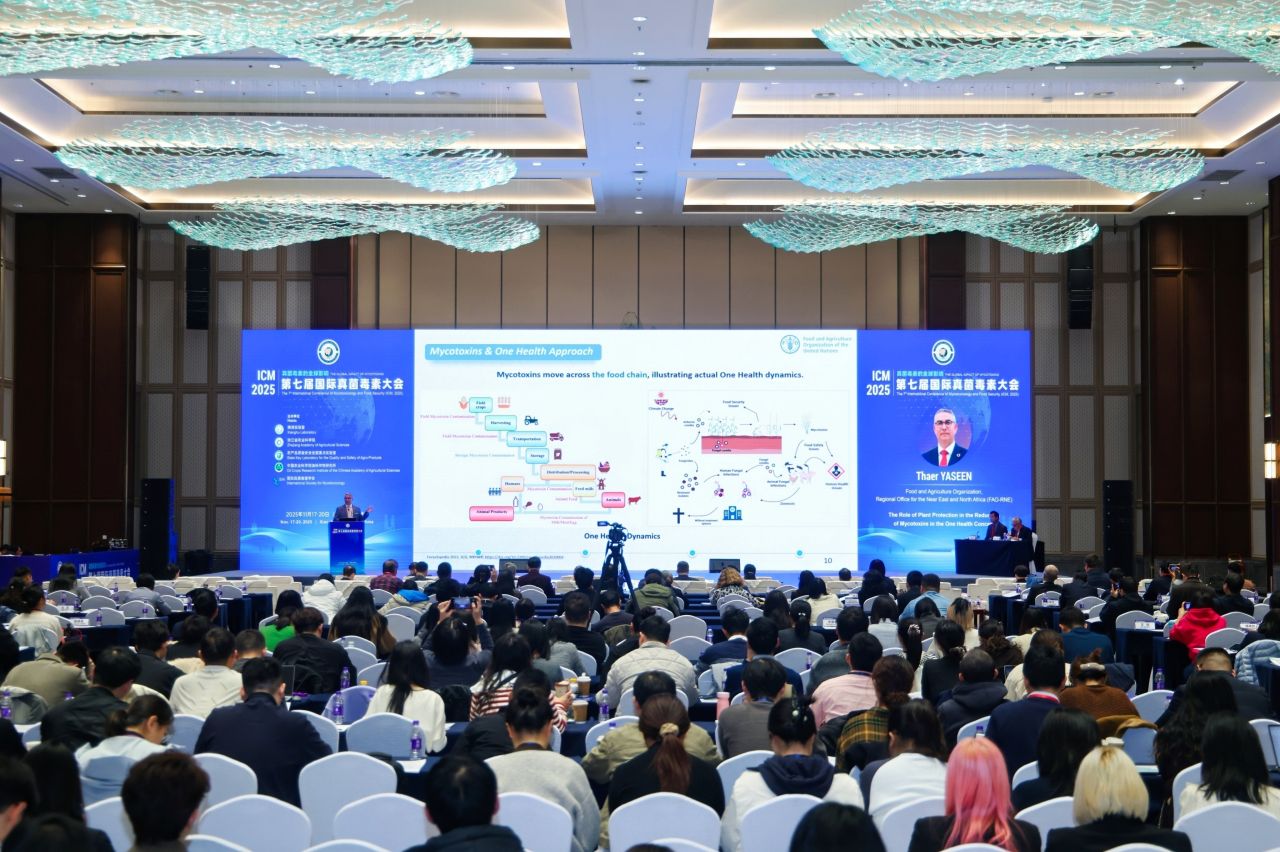
The Food and Agriculture Organization of the United Nations (FAO) reaffirmed the central role of plant protection in reducing mycotoxin risks and safeguarding food security during the 7th International Conference of Mycotoxicology and Food Security (ICM 2025), held from 17–20 November in Hangzhou, China.
Mycotoxins—highly toxic fungal metabolites—remain a major threat to food safety, public health, agricultural productivity, and international trade. Rising contamination risks driven by climate change, pest outbreaks, drought stress, and inadequate post-harvest practices underscore the urgent need for stronger prevention measures.
Representing the FAO Regional Office for the Near East and North Africa (FAO-RNE), Mr. Thaer Yaseen, Regional Plant Protection Officer, emphasized that plant health is a foundational pillar of One Health, linking the well-being of plants, animals, humans, and ecosystems. His intervention highlighted FAO’s science-based strategies to reduce the impact of mycotoxins across the food value chain.
“Healthy plants are the foundation of food security and food safety. By strengthening good agricultural practices, integrated pest management, and improved storage, countries can significantly reduce mycotoxin contamination and protect human and animal health,” Mr. Yaseen stated.
Plant Protection as the First Line of Defense
Estimates indicate that between 25% and 80% of crops worldwide are affected by mycotoxin contamination, leading to substantial economic losses and posing direct risks to human and animal health. To mitigate these dangers, FAO recommends a comprehensive set of preventive interventions, including improved Good Agricultural Practices (GAP), strengthened Integrated Pest Management (IPM), the use of resistant crop varieties, the application of biological control methods, as well as proper drying and safe storage after harvest.
A One Health Imperative
Mr. Yaseen highlighted that mycotoxins pose risks that extend well beyond the farm:
- Human health: liver cancer, immune suppression, acute toxicity
- Animal health: reduced productivity, transfer of AFM1 into milk
- Environmental health: contamination of soil and waste streams
- Economic health: trade disruptions and loss of market access
“Plant protection is no longer solely an agricultural issue—it is a public health imperative central to the One Health agenda,” he noted.
FAO Key Messages at the Conference
FAO emphasized the following priorities for member countries:
- Plant protection as a One Health priority connecting plant, animal, and human health
- IPM as a key tool to reduce insect damage that facilitates fungal infection
- Climate-smart agronomy to mitigate climate-driven increases in aflatoxin risk
- Biocontrol technologies as proven, scalable solutions
- GAP—timely harvest, sanitation, crop rotation—as essential pre-harvest barriers
- Post-harvest drying, sorting, and storage as critical control points
FAO’s Support to Member Countries
FAO reaffirmed its commitment to continuing its support to countries across the region in their efforts to reduce mycotoxin risks. This includes strengthening plant protection and Integrated Pest Management (IPM) programmes, and assisting countries in the adoption and implementation of Codex Alimentarius standards related to mycotoxin limits in food and feed. FAO also supports the development of early warning systems and risk forecasting models to enable proactive responses to climate-driven and seasonal contamination risks. In addition, FAO is working to enhance national laboratory capacities in sampling, analysis, and quality assurance, while also delivering comprehensive training and capacity-building programmes for farmers, agricultural extension services, and food safety personnel to ensure that preventive practices are effectively implemented on the ground.
A Call for Stronger Collaboration
Mr. Yaseen concluded by calling for enhanced collaboration between agriculture, environment, health, and trade sectors, noting that effective mycotoxin prevention requires coordinated multisectoral action under a One Health framework.
For more information on the conference, visit: https://www.icm2025.cn/