


World Bee Day 2026: How Iraqi beekeepers are rebuilding livelihoods one hive at a time


© FAO/Iraq
20/05/2026
Every year on World Bee Day, the world celebrates the essential role of bees and other pollinators in sustaining ecosystems, food systems, and rural livelihoods. The 2026 theme, “Bee together for people and the planet – A partnership that sustains us all”, finds a powerful reflection in Iraq. Across the country, beekeepers are helping to revive a sector deeply rooted in rural life while protecting pollinators, strengthening livelihoods and creating new opportunities for women and youth.
A tradition under threat
In recent years, beekeeping in Iraq has faced significant setbacks. Widespread bee diseases, particularly Varroa mites and the emerging American Foulbrood, have weakened colonies and reduced honey yields. For many rural households, this translated into declining incomes and increased vulnerability.
The impact went beyond honey production. Reduced pollination affected agricultural productivity, while limited technical knowledge and weak market access further constrained the sector’s growth. Women and youth, who had traditionally played an important role in rural livelihoods, faced even fewer opportunities to engage in or benefit from beekeeping activities. Without targeted support, an important agricultural tradition risked further decline.
Rebuilding skills
To respond to these challenges, the project “Strengthening the capacity of beekeepers, women and youth on business management and post-harvest marketing” focused on rebuilding skills, confidence, and resilience within the sector.
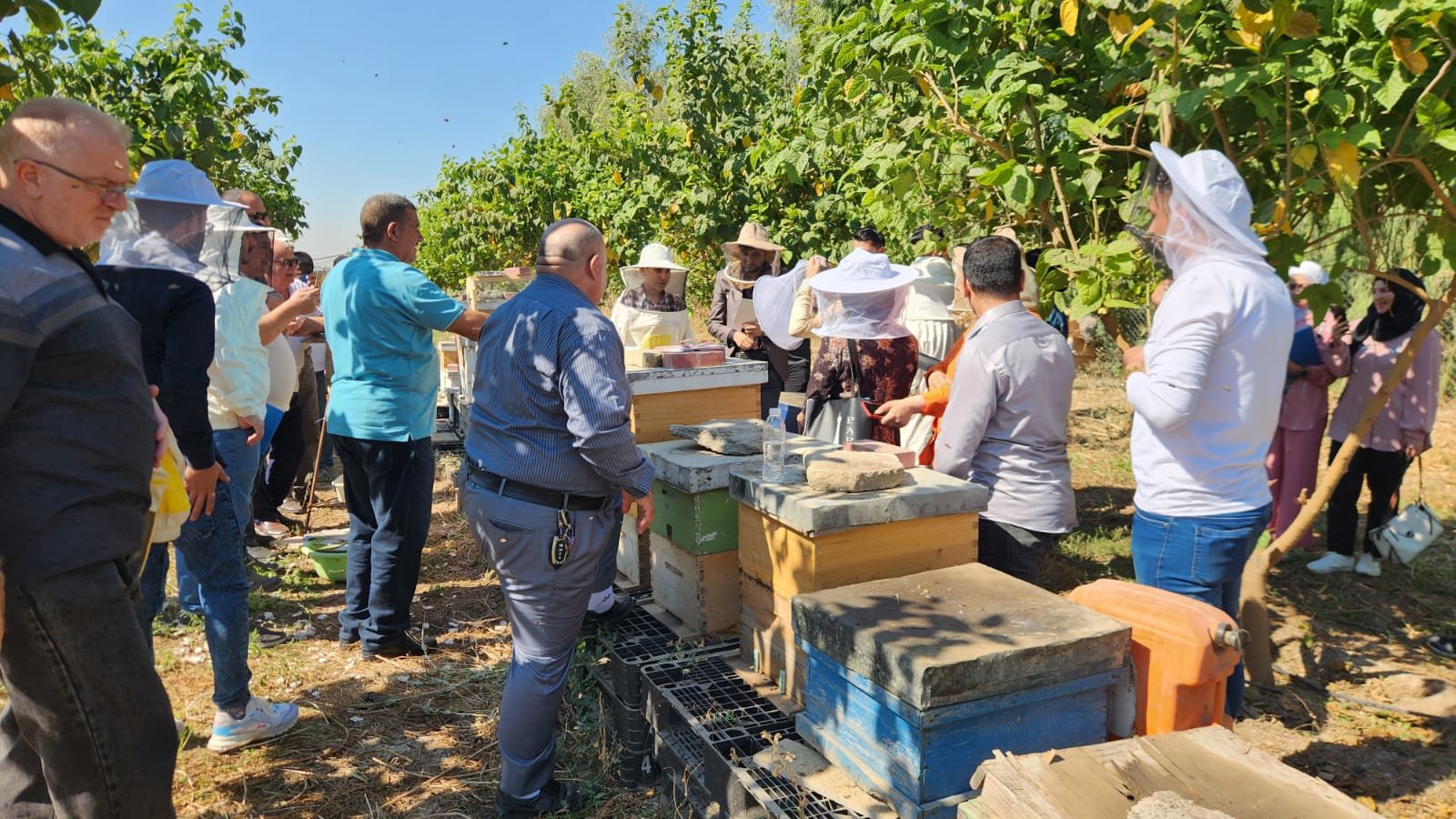
130 beekeepers across 10 governorates were trained in modern beekeeping techniques, pest and disease management, and business development. Rather than relying on theoretical instruction, the training took place directly in functioning apiaries hosted by universities, research institutions, and experienced master beekeepers.
This hands-on approach allowed participants to learn by doing, working with live hives, observing real conditions, and immediately applying improved practices. It created a strong link between knowledge and practice, which proved essential for long-term adoption.

© FAO/Iraq
Tradition meets innovation
While grounded in traditional beekeeping knowledge, the project introduced new tools and approaches. Beekeepers began using simple digital technologies, including mobile-based systems to monitor hive performance and track production trends. These tools helped improve decision-making and early detection of disease risks.
At the same time, participants expanded their technical skills beyond honey production. Training included queen bee rearing, crossbreeding techniques, and diversified production methods such as royal jelly and pollen harvesting. This shift helped reposition beekeeping from a largely traditional practice into a more diversified and commercially viable rural enterprise.
Women and youth at the heart of change
A defining feature of the project was its inclusive approach, with women and youth playing a central role in revitalizing the beekeeping sector. Through practical training in hive management, disease control, and business development, participants strengthened their technical skills, expanded livelihood opportunities, and built stronger connections within local beekeeping networks. The project also helped increase the visibility of women in a sector where their contributions are often underrecognized, while encouraging youth engagement through modern and skills-based approaches to rural livelihoods.
A woman beekeeper leading change in Duhok
One example of this impact is Abdullah Mohammed Zakia, a beekeeper from Sheladize in Duhok Governorate, who has become a strong example of women’s leadership in the sector. While balancing her responsibilities at home, she developed her experience in beekeeping and gradually established herself in a field where women have often had limited visibility. Her work shows how determination, technical skills and community engagement can help women take on a more active role in rural economies and community life.
After participating in FAO-supported training on modern beekeeping techniques, she expanded her technical knowledge and introduced improved practices in her apiary. The training helped strengthen her technical capacity, improve the quality of production and deepen her engagement with other beekeepers in the area. Today, she is recognized as an active voice among beekeepers in Duhok, encouraging cooperation, sharing knowledge with others and demonstrating how supporting women in beekeeping can generate both economic and social benefits for rural communities.
© FAO/Iraq
Learning that continues to grow
Across different agroecological zones, ten educational apiaries were identified and strengthened as long-term training hubs. These sites now serve as living classrooms where beekeepers exchange knowledge, test practices, and strengthen technical skills.
Partnerships with universities, master beekeepers, and local associations ensure that knowledge continues to circulate beyond the project itself through mentorship and peer-to-peer exchange. Beekeepers who participated in the trainings now share their experience with others, creating a multiplier effect that contributes to strengthening the sector as a whole.
This approach also makes the model scalable. By relying on existing infrastructure and human networks, the system can expand without heavy additional investment.
A model for resilient beekeeping systems
By combining hands-on training, practical innovation and strong local partnerships, the project has created a foundation for more resilient and inclusive rural livelihoods.
More broadly, it demonstrates the spirit of World Bee Day and its 2026 theme, which emphasizes the evolving partnership between people and pollinators. The project also reflects wider global priorities highlighted by World Bee Day 2026, as the theme aligns closely with the International Year of Rangelands and Pastoralists 2026 and the International Year of the Woman Farmer 2026. This offers a valuable lens to understand beekeeping as part of broader rural and pastoral livelihood systems.
As Iraqi beekeepers strengthen their hives and expand their knowledge, they are also contributing to a wider transformation: one where traditional livelihoods are reinforced through innovation, and where rural communities are better equipped to sustain both people and the planet.