


Bioenergy as an Energy-Smart Agrifood Solution at the 2025 World Food Forum
©©FAO
04/11/2025
The 2025 edition of the World Food Forum, organized by FAO, ended on October 17th with a special ‘School Assembly’ that focused on the role of young people in shaping a more sustainable food future. The Global Bioenergy Partnership (GBEP) contributed with a Discovery Station specially designed for students, aiming to raise awareness of energy-smart agrifood solutions, with a focus on bioenergy, and how these can contribute to a more productive, resilient and sustainable agrifood sector.
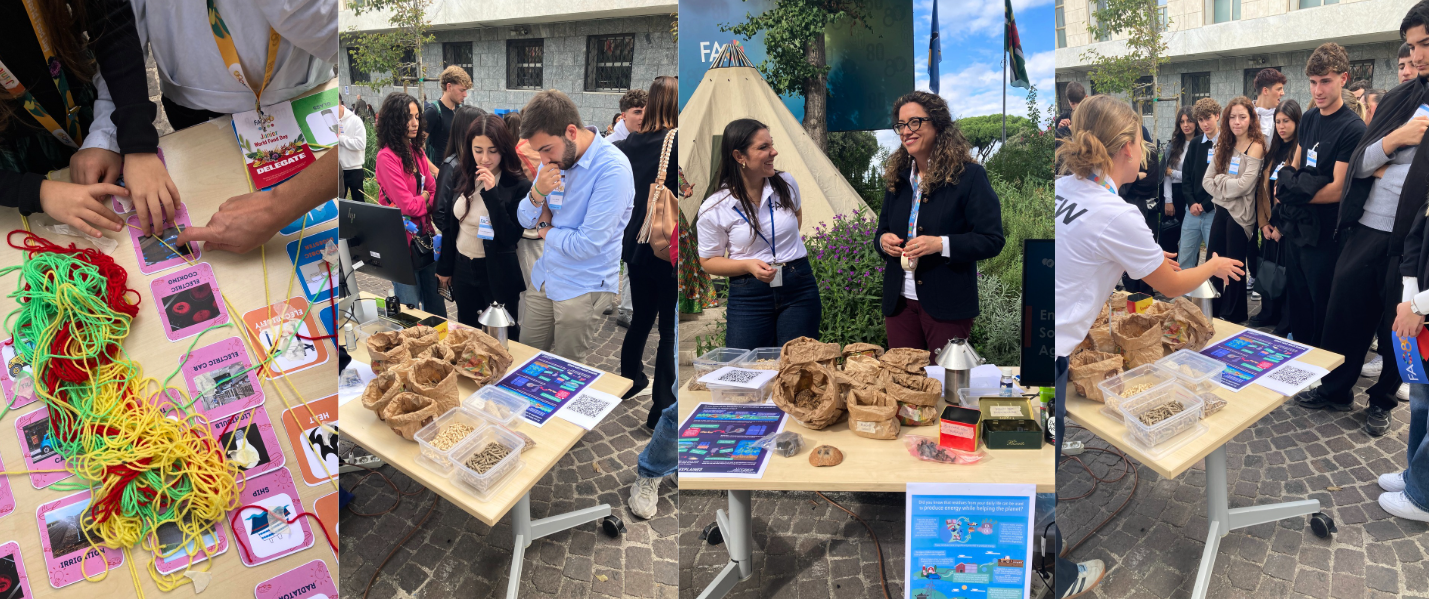
The interactive station engaged high school students in fun, hands-on experiences. Ms. Tiziana Pirelli, Coordinator of the GBEP Secretariat, highlighted the key role of renewable energy in agrifood systems, which are typically energy-intensive and mainly fossil fuel-based. She explained FAO's threefold approach to transforming the agrifood sector by enhancing energy access and the use of renewable energy, improving efficiency of use of energy within agrifood systems, and fostering bioenergy production from agrifood systems for the benefit of the sector and beyond. She introduced various renewable energy options, including gaseous, liquid, and solid bioenergy products that can be derived from agrifood system waste and residues. She also explained the possible competitive uses of these organic raw materials, which can serve to produce energy or other bio-based products.
Ms. Constance Miller showcased a micro gasification model for clean cooking and helped students familiarize themselves with various agricultural and forestry residues that can be used directly or converted into improved feedstock, such as pellets or briquettes, for fueling the cookstove. Besides learning how agricultural residues and other organic materials can be transformed into clean energy, participants learned about the functioning of the small gasifier, delving into the entire cycle: from feedstock pre-treatment, to bioenergy production, and the use of biochar, a gasification by-product, as a soil amendment and raw material for bio-based cosmetics.
As part of this formative and educational experience, students tested their knowledge of renewable energy value chains by taking part in an interactive game. Guided by Ms. Elena Henley and Ms. Linda Migliorati, Youth Energy Smart Agrifood Experts, they were invited to “string their energy value chain” by connecting colored threads between cards representing different types of energy sources, processing technologies, energy types, and energy end uses. The experience showcased how climate change, energy, and food systems are deeply interconnected, helping students grasp the importance of bioenergy in achieving a more sustainable, circular, and low-carbon future!
The interactive station engaged high school students in fun, hands-on experiences. Ms. Tiziana Pirelli, Coordinator of the GBEP Secretariat, highlighted the key role of renewable energy in agrifood systems, which are typically energy-intensive and mainly fossil fuel-based. She explained FAO's threefold approach to transforming the agrifood sector by enhancing energy access and the use of renewable energy, improving efficiency of use of energy within agrifood systems, and fostering bioenergy production from agrifood systems for the benefit of the sector and beyond. She introduced various renewable energy options, including gaseous, liquid, and solid bioenergy products that can be derived from agrifood system waste and residues. She also explained the possible competitive uses of these organic raw materials, which can serve to produce energy or other bio-based products.
Ms. Constance Miller showcased a micro gasification model for clean cooking and helped students familiarize themselves with various agricultural and forestry residues that can be used directly or converted into improved feedstock, such as pellets or briquettes, for fueling the cookstove. Besides learning how agricultural residues and other organic materials can be transformed into clean energy, participants learned about the functioning of the small gasifier, delving into the entire cycle: from feedstock pre-treatment, to bioenergy production, and the use of biochar, a gasification by-product, as a soil amendment and raw material for bio-based cosmetics.
As part of this formative and educational experience, students tested their knowledge of renewable energy value chains by taking part in an interactive game. Guided by Ms. Elena Henley and Ms. Linda Migliorati, Youth Energy Smart Agrifood Experts, they were invited to “string their energy value chain” by connecting colored threads between cards representing different types of energy sources, processing technologies, energy types, and energy end uses. The experience showcased how climate change, energy, and food systems are deeply interconnected, helping students grasp the importance of bioenergy in achieving a more sustainable, circular, and low-carbon future!