Discover
About FAO
News
Multimedia
Main topics
Statistics
Members
Publications
English
Français
Español
Português
Home
Publications
Share
FAO Regional Office for Latin America and the Caribbean
About us
History
FAO in the Region
FAO in the Caribbean
FAO in Mesoamerica
Member Countries
Regional Representative
Deputy Regional Representative
Regional Conference
Regional Commissions
Priorities
News
News
Caribbean News
FAO experts' opinion
Stories
Interviews
Events
Publications
Publications
Collections
Focus
Multimedia
Multimedia
Photo Stories
Partners
Partners
Brazil-FAO International Cooperation
Spain-FAO Program
Mesoamerica Hunger Free AMEXCID-FAO
Jobs
Tenders
Publications
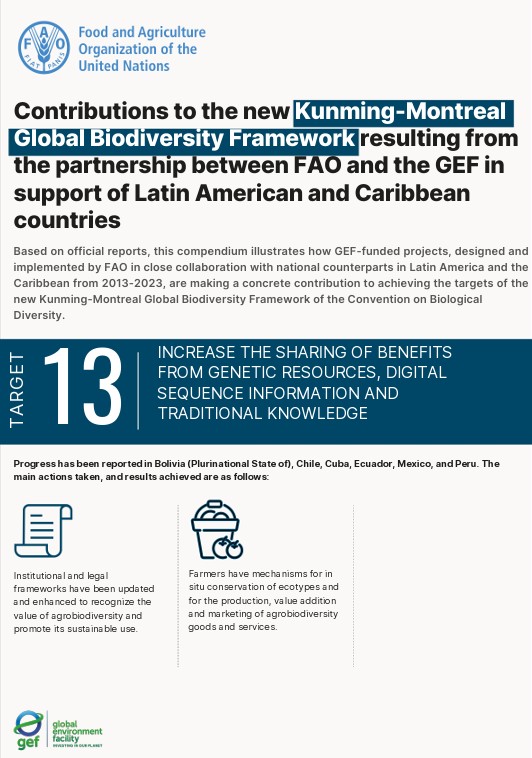
Target 13: Increase the sharing of the benefits arising from genetic resources, digital sequence information and traditional knowledge
10/04/2024
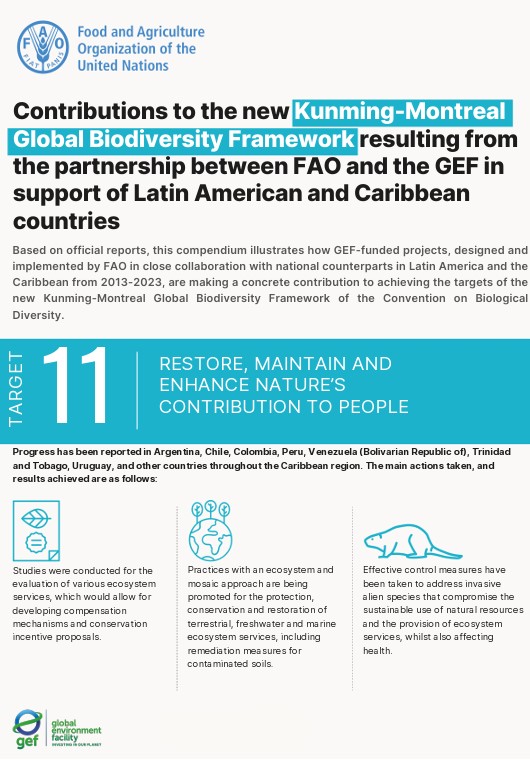
Target 11: Restore, sustain and enhance nature's contribution to people
10/04/2024
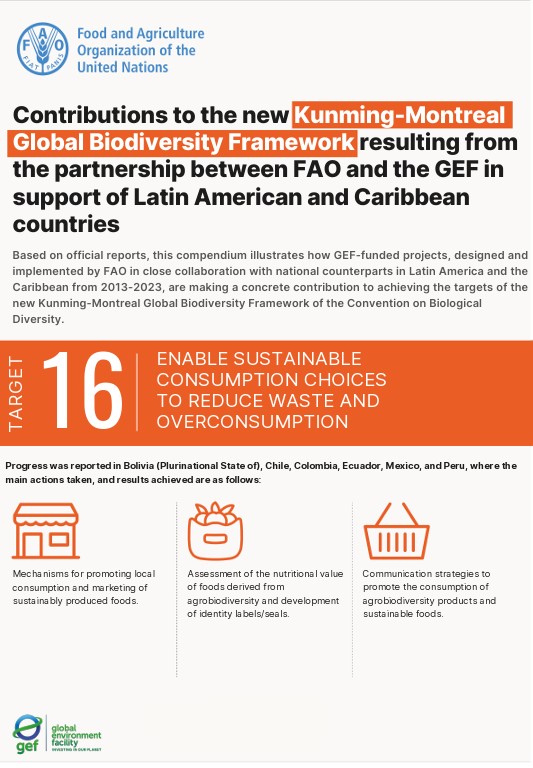
Target 16: Enable sustainable consumption choices to reduce waste and overconsumption
10/04/2024
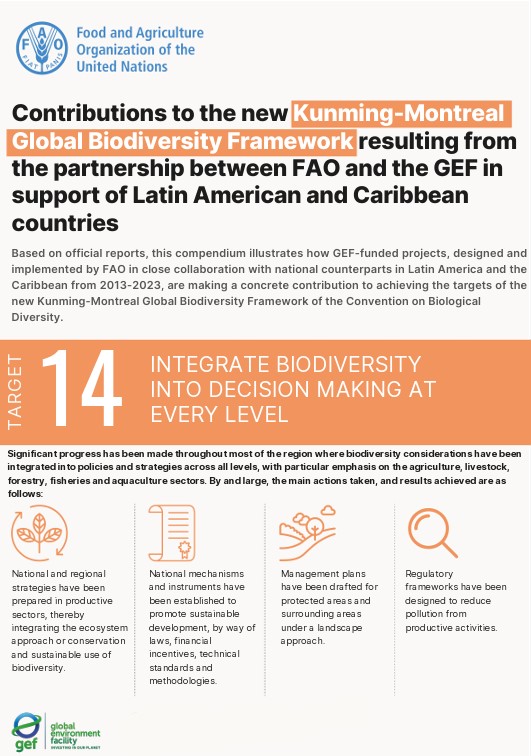
Target 14: Integrate biodiversity into decision-making at all levels
10/04/2024
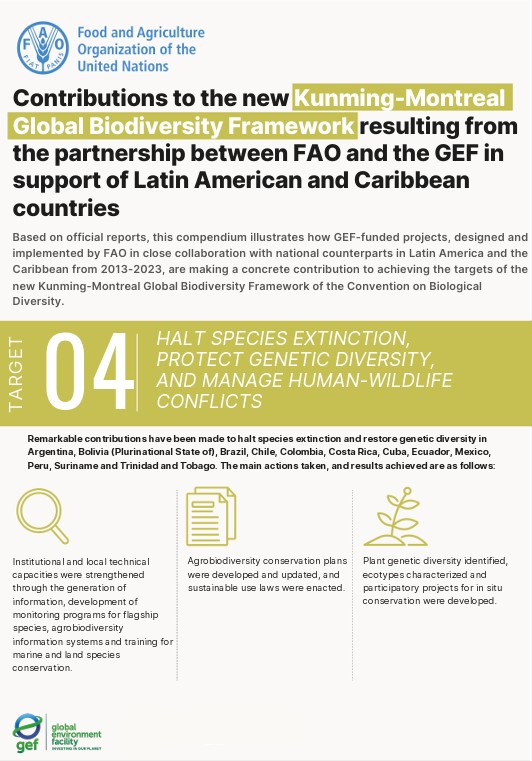
Target 04: Halt species extinction, protect genetic diversity, and manage human-wildlife conflicts
10/04/2024
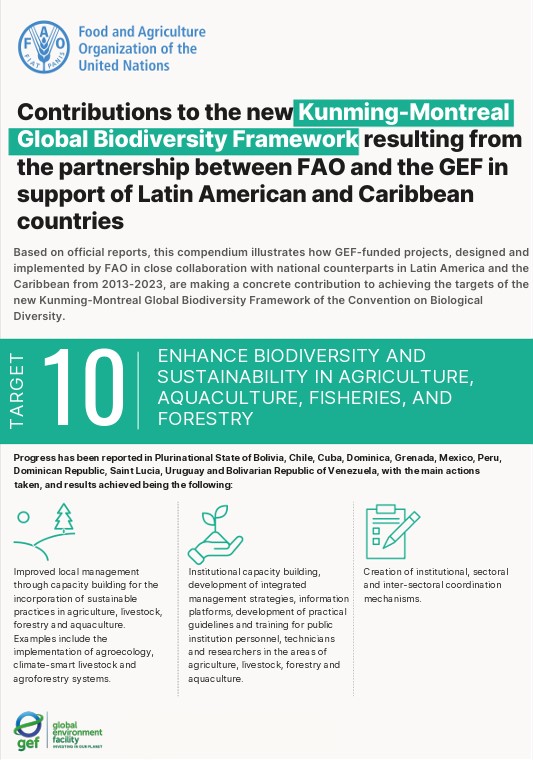
Target 10: Enhance biodiversity and sustainability in agriculture, aquaculture, fisheries and forestry
10/04/2024
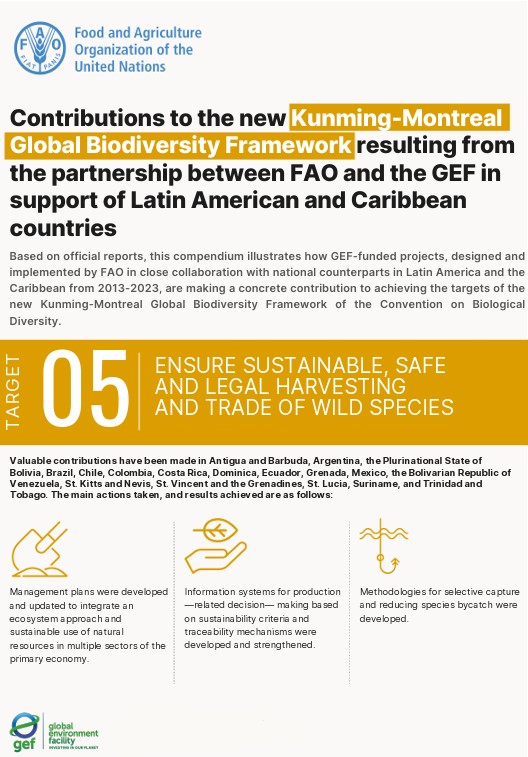
Target 05: Ensure sustainable, safe and legal harvesting and trade of wild species
10/04/2024
11
12
13
14
15
16
17
18
19
20
Search by
Advanced search
Location
Antigua and Barbuda (22)
Argentina (20)
Bahamas (24)
Barbados (25)
Belize (24)
Bolivia (Plurinational State of) (21)
Brazil (21)
Chile (21)
Colombia (21)
Costa Rica (22)
Cuba (21)
Dominica (22)
Dominican Republic (20)
Ecuador (20)
El Salvador (21)
Grenada (22)
Guatemala (22)
Guyana (22)
Haiti (24)
Honduras (21)
Jamaica (23)
Mexico (21)
Nicaragua (21)
Panama (20)
Paraguay (20)
Peru (20)
Saint Kitts and Nevis (24)
Saint Lucia (22)
Saint Vincent and the Grenadines (22)
Suriname (22)
Trinidad and Tobago (22)
Uruguay (20)
Venezuela (Bolivarian Republic of) (20)
Search
Key Documents
Boletín de publicaciones 2024 ( In Spanish)
Publications
2030 Series
FAO-FLAMA Newsletters
Contact
Mariela Ramírez
Regional Publications Coordinator