


FAO emergencies and resilience
Videos
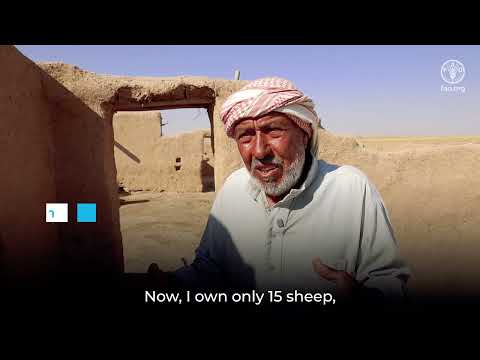
SHF and FAO protect livestock families in Northeast Syria rely on for survival
20/08/2026
With support from the Syria Humanitarian Fund (SHF), FAO provided 500 kg of supplementary animal feed to each of 11 072 livestock-keeping households (66 400 people) across Al-Hasakeh, Ar-Raqqa and Deir ez-Zor, helping families protect the productive assets they depend on for food security and livelihoods.
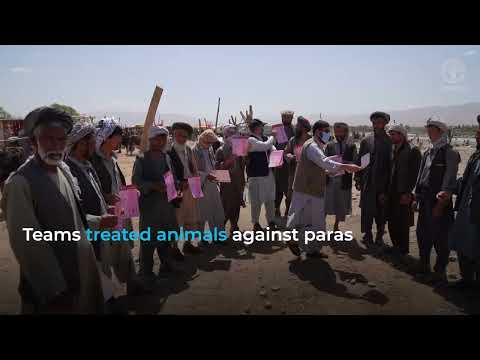
Protecting people and animals from Crimean-Congo haemorrhagic fever in Afghanistan
12/08/2026
Before Eid al-Adha, millions of animals are bought, sold and slaughtered across Afghanistan, increasing the risk of Crimean-Congo haemorrhagic fever (CCHF), a disease transmitted from animals to people primarily through the bite of infected ticks.

Providing life-saving agricultural assistance in Myanmar’s vulnerable areas
29/07/2026
In Myanmar, nearly one-third of the population faces acute food insecurity as conflict, displacement and recurrent shocks disrupt livelihoods, leaving small-scale farmers struggling to produce food and meet their basic needs.

Promoting rain harvest technique through FAO Farmer Field School
24/06/2026
With the support of UK Foreign, Commonwealth and Development Office, under the Building Local Resilience in Syria (BLRS), FAO has promoted micro rainwater harvesting techniques to farmers to enhance their resilience to water scarcity and climate variability.

FAO e-vouchers in Mozambique
07/05/2026
This video highlights how the Food and Agriculture Organization of the United Nations (FAO), in partnership with the Government of Mozambique and partners, is supporting farming families affected by the 2026 floods in central and southern Mozambique through the electronic e-voucher system.