News and events
News
Members exchange experiences on key food and agriculture matters in Europe and Central Asia
16/05/2024
The Thirty-fourth Session of the Food and Agriculture Organization of the United Nations (FAO) Regional Conference for Europe (ERC), scheduled from 14 to 17 May in Rome, is in full swing. This conference, which is the main FAO decision-making body for its Europe and Central Asia region, features ministerial round-table discussions and side events on current challenges and opportunities for the food and agriculture realm of the region. Hosted at FAO’s headquarters and webcast live online, the ERC side events welcome speakers from governments, the private and civil sectors, and the academic community to look at such key issues as sustainable locust management, foresight drivers and triggers, climate action, water resource management, true cost accounting, and the challenges of transforming agrifood systems in landlocked developing countries to be more inclusive, resilient and sustainable – all from a regional perspective.

FAO, GCF collaborate to strengthen climate partnerships in Eastern Europe and Central Asia
02/04/2024
Seeds and fertilizer bring relief to Moldovan farmers
28/02/2024
Celebrating the dry seeds of life
08/02/2024
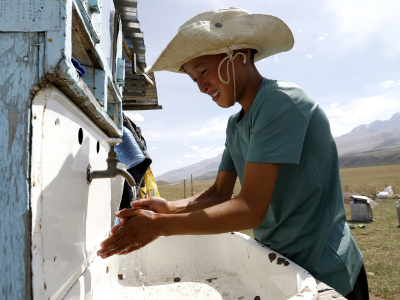
FAO supports Kyrgyzstan's shift to more sustainable mountain management
01/02/2024
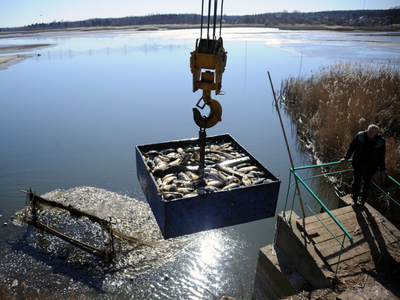
Successful conclusion of FISHCap project offers promise for new ventures
22/01/2024
In Central Asia, sustainable fisheries and aquaculture represent significant untapped potential, yet enhancing institutional capacity for increased production and development remains a persistent challenge.
In response to these challenges, the FISHCap project was launched under the umbrella of the FAO–Türkiye Partnership Programme on Food and Agriculture, and implemented in Azerbaijan, Kazakhstan, Kyrgyzstan, Tajikistan, Türkiye, Turkmenistan and Uzbekistan, to address obstacles to sustainability in the fisheries and aquaculture sector.
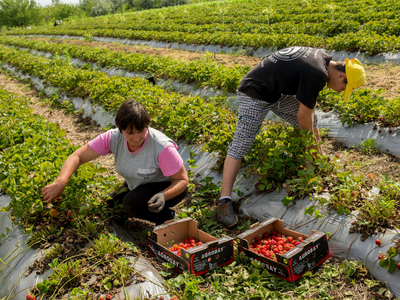
Green technologies enable a better future for Moldovan farmers
21/12/2023
Biodiversity framework tops agenda as experts on Europe’s forests and forest industry meet
21/11/2023
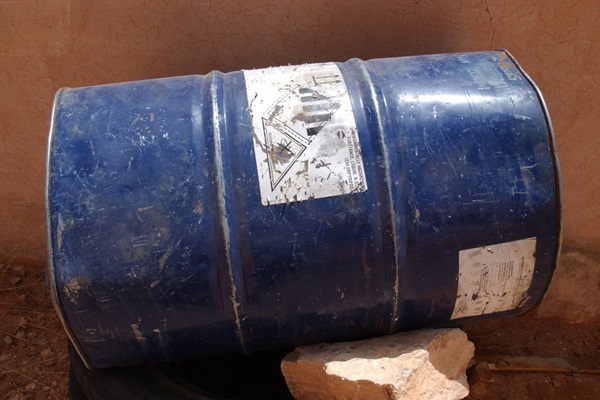
Experts lay plans for obsolete pesticides in Central Asia, Türkiye during Baku workshop
24/10/2023
It is estimated that around half the obsolete pesticides in the world can be found in the former Soviet Union, with a large portion currently sitting in Central Asia. During Soviet times, the region was an important centre for agriculture, particularly cotton production, with mandatory pesticide application and oversupply.