


News and events
News
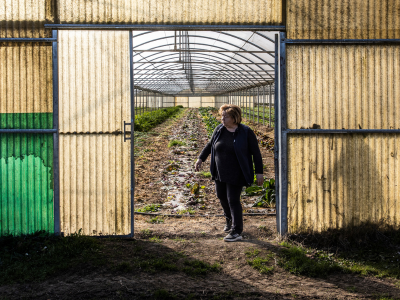
Standing the test: Five countries see proof of IPM success at FAO workshop
23/05/2025
Serbia strengthens national expertise in carbon accounting for agrifood systems
21/05/2025
Armenia makes progress in building forest resilience
12/05/2025
Planty of reasons to celebrate plant health
12/05/2025
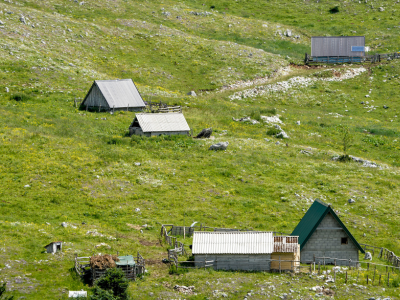
FAO and Montenegro partner to enhance climate action in agriculture and forestry
09/05/2025
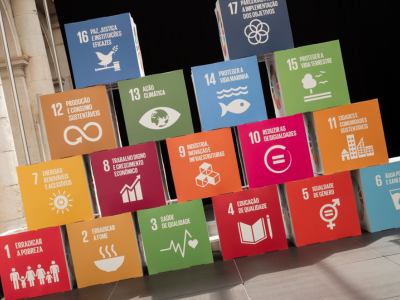
Peer-to-peer learning helps municipalities to localize the Sustainable Development Goals
09/05/2025
A group of municipality representatives from Bosnia and Herzegovina and Georgia visited Mafra, a Portuguese municipality, last week to learn more from its example on localizing the Sustainable Development Goals (SDGs). Mafra has shown a strong commitment in overall SDG implementation at the municipal level and in the development of a Voluntary Local Review (VLR), the internationally accepted process to review the implementation of SDGs at sub-national level.
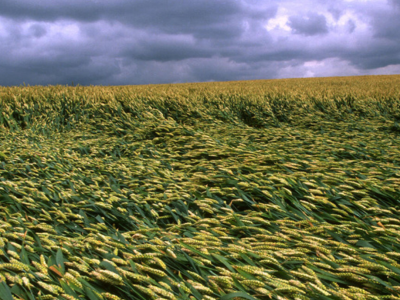
Turkmenistan consultation addresses tech, private investment and climate finance access
02/05/2025
Stakeholders from across Turkmenistan gathered in Ashgabat on 17 April 2025 for a consultation focused on accelerating the country's access to climate finance by identifying crucial climate-resilient technologies and boosting private-sector engagement in climate action. The consultation was part of the Green Climate Fund (GCF) Readiness project Improving the Capacity of Turkmenistan to Access Climate Finance through Capacity Building and Strategic Frameworks.
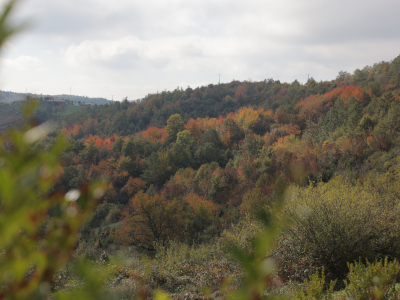
Training strengthens Kosovan forest sector assessment and monitoring
02/05/2025
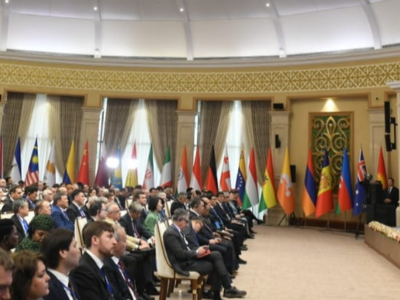
FAO Director-General: Mountain regions have great potential despite climate, biodiversity and land degradation threats
24/04/2025
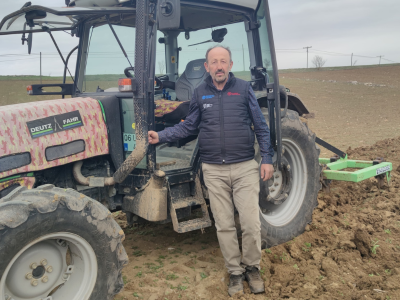
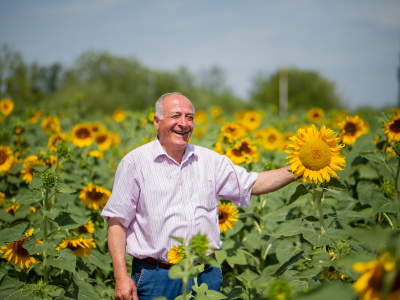
Kamil Yıldız: A role model farmer for Earth Day
22/04/2025
Events
21/5
2024
Third Regional Dialogue on Globally Important Agricultural Heritage Systems
Virtual Event, 21/05/2024
Since 2015, FAO has supported Members in the Europe and Central Asia region through the Globally Important Agricultural Heritage Systems (GIAHS) programme, which recognizes the commendable work of our farmers, herders, fishers and forestry people and serves a tool to protect and conserve the resilient agricultural systems they have built up. The third Regional Dialogue on GIAHS for Europe and C...
22/5
2024
23/5
2024
International forum for action on sustainable beekeeping and pollination
Ljubljana (Slovenia), 22/05/2024 - 23/05/2024
The Government of Slovenia and the Food and Agriculture Organization of the United Nations (FAO) organize an International forum for action on sustainable beekeeping and pollination. This biennial event brings together governments, experts, business and civil society to give a regular fresh impetus to the international cooperation on beekeeping and pollination and to align it with the quickly c...
16/4
2024
Conference on Bio- and Phyto-Remediation Technologies for Contaminated Agricultural Soil Towards Green Agriculture
Almaty (Kazakhstan), Hybrid Event, 16/04/2024
In the framework of the Global Environment Facility (GEF)-funded and FAO-managed project “Lifecycle Management of Pesticides and Disposal of POPs Pesticides in Central Asian countries and Türkiye”, there remediation trials have taken place in Kazakhstan and Kyrgyzstan in the past years. Through this international conference, the results of these trials will be presented and explained, while pro...
25/3
2024
26/3
2024
Regional workshop on building resilience in agrifood systems for drought mitigation and emergency support
Chișinău (Moldova), Hybrid Event, 25/03/2024 - 26/03/2024
FAO is convening a regional workshop in Chisinau, Republic of Moldova from 25 to 27 March 2024 on climate-smart agriculture practices and policies as a way to increase resiliency in the face of current severe natural and human-made crises.
21/3
2024
Conference: Forests and Innovation. New solutions for a better world
Moscow (Russia), Hybrid Event, 21/03/2024
On the occasion of the International Day of Forests, FAO, in close cooperation with the Russian Federal Forestry Agency, is organizing a scientific and practical conference dedicated to this year’s theme: “Forests and innovation: New solutions for a better world” involving renowned international experts and decision-makers.
27/6
2023
GEF-funded project “Integrated Natural Resources Management in Degraded Landscapes in the Forest-Steppe Zone of Ukraine” closes
Kyiv (Ukraine), Hybrid Event, 27/06/2023
Invited speakers will present the main achievements of the project, review its challenges, and describe further plans and opportunities. The project was a joint initiative of the Food and Agriculture Organization of the United Nations (FAO) and Global Environment Facility (GEF), the Ministry of Environmental Protection and Natural Resources of Ukraine, and the Ministry of Agrarian Policy a...
21/6
2023
22/6
2023
Second regional dialogue on biodiversity mainstreaming across agricultural sectors in Europe and Central Asia
Virtual Event, 21/06/2023 - 22/06/2023
The interlinked climate change and biodiversity-related crises top the charts of short-term and long-term risks the world will face over the next decade. The restoration, conservation and sustainable use of biological diversity are critical to addressing global environmental challenges, building our ...
11/4
2023
Inception Workshop on Carbon Sequestration through Climate Investment in Forests and Rangelands
Bishkek (Kyrgyzstan), Hybrid Event, 11/04/2023
On Tuesday 11 April FAO is organizing the launch of the FAO-GCF project “Carbon Sequestration through climate investment in forests and rangelands (CS-FOR) in the Kyrgyz Republic”.
24/5
2023
Nature-based solutions related to apiculture and wild pollinators
Qakh (Azerbaijan), Hybrid Event, 24/05/2023
The FAO Subregional Office for Central Asia is organizing a hybrid event “Nature-based solutions related to apiculture and wild pollinators” on 24 May 2023.
27/3
2023
Localizing SDGs: Agrifood systems transformation as a key accelerator
Virtual Event, 27/03/2023
2030 is seven years away and we are far from achieving the SDGs. We are at risk of not achieving in full the targets related to agrifood systems by 2030. Climate change, along with other drivers and crises, is already undermining the recent progress made in promoting sustainable rural livelihoods and fighting against all forms of malnutrition. To continue ensuring food security and nutrition...