


News and events
News
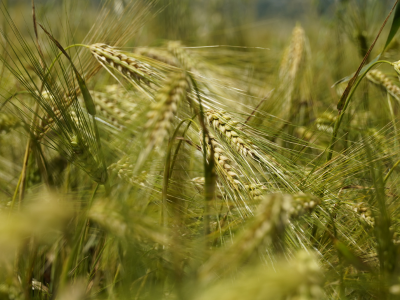
Turkmenistan advances resilience in cotton production and pest management in cereal crops
11/04/2025
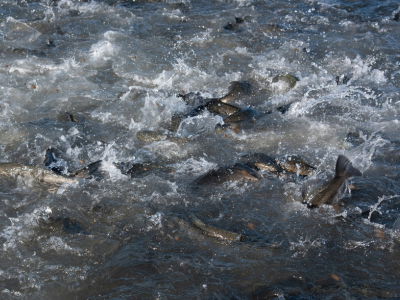
Just keep swimming: FAO works to mitigate climate change on inland aquatic resources and fisheries in Europe
07/04/2025
Inland capture fisheries play a vital role in supporting households, economies and cultures across Europe, through both commercial and recreational fishing. According to capture and landing statistics reported to the Food and Agriculture Organization of the United Nations (FAO), the total production from inland capture fisheries in Europe reached 167 187 tonnes in 2021, accounting for 1.5 percent of total global production, making this sector highly important for the region. Yet, climate change poses several challenges to the survival of fish species across Europe. It creates significant and often unpredictable impacts on inland fisheries, and it can be an exacerbating factor for other stressors. Foreseeably, this will lead to shifts in freshwater habitats which are mainly expected to be unfavourable for inland fisheries.
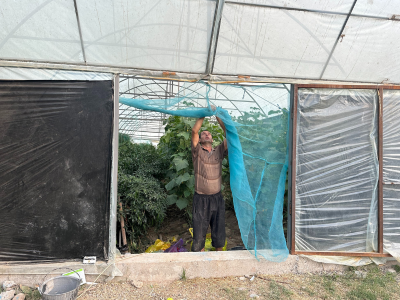
Innovative farming in Tajikistan
03/04/2025
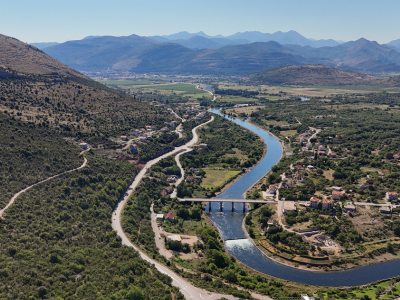
Forest restoration restores ecosystems and strengthens rural communities in Bosnia and Herzegovina
01/04/2025

Welding education and energy efficiency boost skilled workforce development in Armenia
24/03/2025
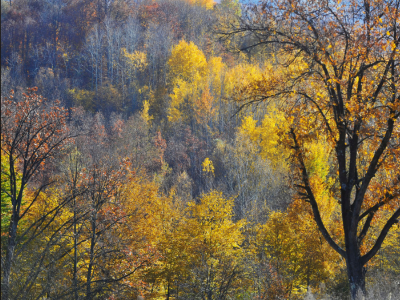
Enhanced Forest Resilience project signed into action in Serbia
20/02/2025
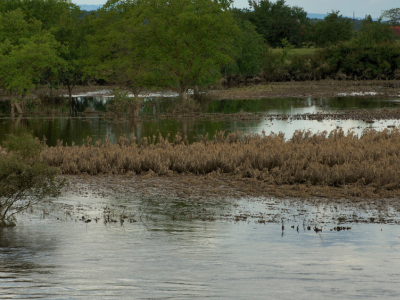
Comprehensive FAO analysis published for improved disaster risk reduction and management systems
11/02/2025

From theory to practice: Armenian high school students embrace reforestation skills
13/12/2024
On 21 November 2024 in Syunik Marz, Armenia, high school students in Goris received training in tree planting and forest management. The activity was carried out by the local Forestry branch of Hayantar SNCO, the state organization for forest management in Armenia, together with the Food and Agriculture Organization of the United Nations (FAO) in Armenia. The community awareness raising event was organized within the framework of the project “Sustainable Forest Management in Armenia,” implemented by the Ministry of Environment and FAO. The project is co-funded by a grant from the Green Climate Fund, FAO, the Austrian Development Agency, the World Wildlife Fund and the Autonomous Province of Bolzano-Italy. A significant amount of funding is provided by the Government of Armenia.
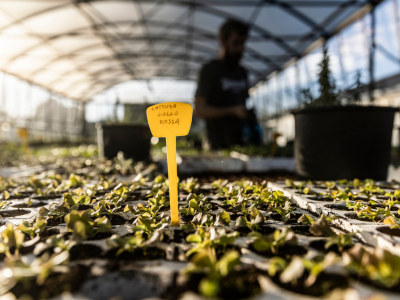
International No Pesticide Use Day: the start of a future free from pesticide effects
05/12/2024
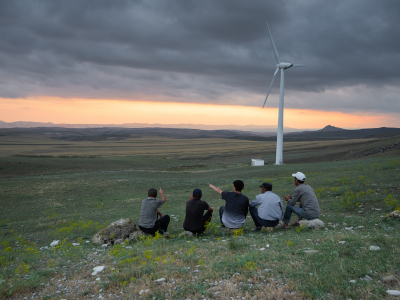
COP29: FAO promotes sustainable agrifood systems transformation for Europe and Central Asia to drive climate action
27/11/2024
The growing recognition of sustainable agrifood systems in addressing climate change is reflected in international negotiations at the recent Conferences of the Parties (COP) of the United Nations Framework Convention on Climate Change (UNFCCC). The day dedicated to Food, Agriculture and Water on 19 November 2024 at COP29 highlights this intensified focus. The day opened with the launch of the Baku Harmoniya Climate Initiative for Farmers (Harmoniya Initiative), a collaboration between the COP29 Presidency and the Food and Agriculture Organization of the United Nations (FAO).
Events
13/3
2023
17/3
2023
Regional Training on Strengthening seed system management in South European and Central Asian countries
Yerevan (Armenia), 13/03/2023 - 17/03/2023
In the framework of the regional programme on seed system and the project titled “Creating enabling environments for enhanced climate resilience in agriculture”, FAO Regional Office for Europe and Central Asia is organizing a regional training between 13-17 March 2023 Yerevan, Armenia, to strengthen seed system management in South European and Central Asia c...
14/12
2022
Green Agriculture and Science and Innovation: Main scientific findings in Europe and Central Asia
Virtual Event, 14/12/2022
Agrifood systems in Europe and Central Asia are deeply affected by geopolitical and economic uncertainties which impact both directly and indirectly on food supply chains, and have repercussions in food markets; moreover, they are threatened by environmental, human-driven long-term stresses, such as climate change, deforestation, biodiversity loss and natural resource degradation.
5/12
2022
6/12
2022
Regional Webinar Series on Soil Protection as part of World Soil Day 2022
Hybrid Event, 05/12/2022 - 06/12/2022
Let’s celebrate World Soil Day 2022! As soils provide most of our food and are central to our planet’s life-support system. Without healthy soils, we cannot sustain healthy lives.
30/9
2021
Regional workshop for Globally Important Agricultural Heritage Systems in Azerbaijan
Hybrid Event, 30/09/2021
In the frame of the European Union-funded project on the development of sustainable and inclusive local agrifood systems in north-west region of Azerbaijan, the Republic of Azerbaijan embarked on identifying potential agricultural heritage systems in its north-west region.
16/11
2021
17/11
2021
Regional dialogue on biodiversity mainstreaming across agricultural sectors in Europe and Central Asia
Hybrid Event, 16/11/2021 - 17/11/2021
11:00 – 13:00 (CET) FAO supports member countries in mainstreaming biodiversity conservation and sustainable use in the agriculture sector. Following the first global multi-stakeholder dialogue, and in line with its mandate to coordinate a collective effort, FAO convenes the first regional dialogue on biodiversity mainstreaming for Europe and Central Asia.
22/2
2022
FAO’s 2nd Regional Workshop: The Road Ahead after COP26: Enhancing Targets and Compliance with Enhanced Transparency Framework (ETF) for Agriculture and LULUCF
Hybrid Event, 22/02/2022
10.00-13.00 (CET) The FAO Regional Workshop, “The Road Ahead after COP26: Enhancing Targets and Compliance with Enhanced Transparency Framework (ETF) for Agriculture and LULUCF” aims to support the developing states and emerging economies of the Europe a...