FAO Regional Office for Europe and Central Asia

News and events

News
25/09/2024
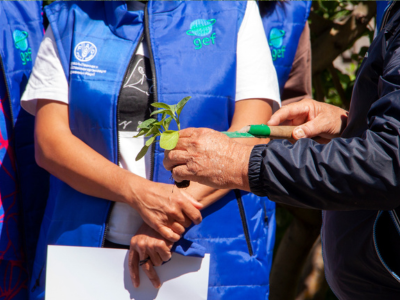
Food and Agriculture Organization of the United Nations (FAO), in collaboration with the Ministry of Agriculture of Azerbaijan, convened a regional workshop on “Enhancing climate action in agriculture in Europe and Central Asia” to support national governments in the region to prepare for the 29th Conference of the Parties (COP) to the United Nations Framework Convention on Climate Change (UNFCCC) that will be held in November this year. 
16/07/2024
The Food and Agriculture Organization of the United Nations (FAO) has provided advanced tools and training in techniques in forest data collection and forest fire management to experts from the Caucasus, Central Asia and Türkiye. 
Representatives from Azerbaijan, Georgia, Kazakhstan, Kyrgyzstan, Tajikistan, Türkiye, Turkmenistan, and Uzbekistan gathered in Antalya, Türkiye from 8 to 12 July 2024 for the event, which was organized in collaboration with the United Nations Economic Commission for Europe (UNECE) and the General Directorate of Forestry of Türkiye.
01/07/2024
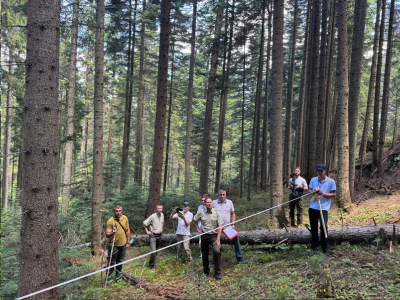
An ongoing initiative by the Food and Agriculture Organization of the United Nations (FAO) is backing Montenegro’s pursuit to improve forest management planning and monitoring in the country’s private forests. In the framework of the FAO project, Montenegro’s Ministry of Agriculture, Forestry and Water Management welcomed representatives of Slovenia’s Ministry of Agriculture, Forestry and Food, the Forest Service, and the Forestry Institute from 17 to 19 June 2024 in Montenegro, for a second time to discuss new approaches to forest management planning and monitoring in private forests.
04/06/2024
According to a recent report published by the Climate Policy Initiative, a mere 4 percent of global climate finance reached agrifood systems between 2019 and 2020. This falls drastically short of what's needed and despite the crucial role of agrifood systems in climate change mitigation and adaptation. To achieve the ambitious goals outlined in the Sustainable Development Goals (SDGs) and the Paris Agreement to effectively transform agrifood systems for climate action, experts estimate that mobilizing about USD 680 billion annually until 2030 is necessary. The Food and Agriculture Organization of the United Nations (FAO) is working to help address the financing gap through the multi-stakeholder Food and Agriculture for Sustainable Transformation Partnership (FAST Partnership). 
29/05/2024

As part of an ongoing pesticide management and disposal project from the Food and Agriculture Organization of the United Nations (FAO) and the Global Environment Facility (GEF) in Central Asia and Türkiye, two international events were held in Almaty, Kazakhstan. To discuss the latest trends and explore the ways digital technologies can ameliorate the management of pests and pesticides in Central Asia, a workshop on emerging green technologies for pest and pesticide management on 15 April was conducted.

21/05/2024
Through its Globally Important Agricultural Heritage Systems (GIAHS) initiative in Europe and Central Asia, the Food and Agriculture Organization of the United Nations (FAO) works to recognize and sustain traditional agricultural systems with rural cultures and economies and to promote and  integrate them into broader food systems value chains. Science and innovation play important roles in underpinning the strength and viability of GIAHS. 
16/05/2024

The Thirty-fourth Session of the Food and Agriculture Organization of the United Nations (FAO) Regional Conference for Europe (ERC), scheduled from 14 to 17 May in Rome, is in full swing. This conference, which is the main FAO decision-making body for its Europe and Central Asia region, features ministerial round-table discussions and side events on current challenges and opportunities for the food and agriculture realm of the region. Hosted at FAO’s headquarters and webcast live online, the ERC side events welcome speakers from governments, the private and civil sectors, and the academic community to look at such key issues as sustainable locust management, foresight drivers and triggers, climate action, water resource management, true cost accounting, and the challenges of transforming agrifood systems in landlocked developing countries to be more inclusive, resilient and sustainable – all from a regional perspective.

02/04/2024
The Food and Agriculture Organization of the United Nations (FAO) helped organize the GCF Regional Dialogue with Eastern Europe and Central Asia and fostered peer-to-peer learning related to country experiences and best practices. In facilitating the identification and development of climate change mitigation and adaptation initiatives, FAO strengthened the GCF’s impact in the region.
28/02/2024
The Republic of Moldova is at high risk of drought and extreme weather events, two challenges exacerbated by climate change. Family farmers and others in the agriculture sector are the most vulnerable to the impacts of these extreme events. The severe drought in 2022, for example, was devastating for smallholder farmers. In 2023, the Food and Agriculture Organization of the United Nations (FAO) distributed 30 tonnes of seeds and 60 tonnes of fertilizer to 1 224 small farmers in the Calarasi, Rascani and Cantemir districts.

08/02/2024
There is a growing trend to produce and consume sustainable food motivated both by concerns for health and for the world that future generations will inherit. Often we forget about the secret weapon in the sustainability toolbox: pulses. Luckily, every year, World Pulses Day (10 February) reminds us of their crucial role in making agriculture and our diets more  eco-friendly, carbon-neutral and low-impact.
Events